
There is no single best plastic for makeup packaging. PET can be a strong starting point when shade visibility matters, PP can suit lightweight refillable components, and ABS can support a decorated compact shell. The right decision depends on the component role, formula contact, appearance, decoration, logistics and end-of-life route. This guide shows how to narrow the material shortlist without treating a resin name as a complete package specification.
Start with the packaging job
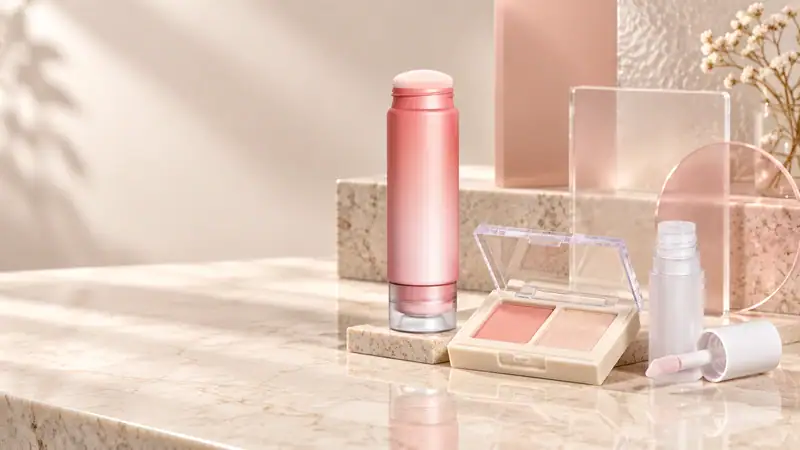
Begin with the job each part must perform. Separate direct-contact components from outer shells and decorative parts. A compact may combine an ABS outer case, a metal pan and a PP insert. A liquid foundation system may use a PET or PETG body, a PP or mixed-material pump and an elastomer seal. A lipstick may use an ABS or PP tube, a metal mechanism and a decorative cap. These parts cannot be approved by one resin label alone.
Direct-contact parts need formula compatibility, cleanability and reliable closure interfaces.
Outer shells need impact resistance, color consistency, decoration adhesion and a premium hand feel.
Refillable parts need controlled separation, repeatable fit, cleaning access and a realistic end-of-life route.
Use a material shortlist, not a single-resin rule
Use the table as a starting shortlist. The same resin can behave differently when wall thickness, molded-in stress, colorants, coatings, labels, adhesives and closure interfaces change. Final approval still belongs to the complete filled package.
| Material | What it offers | Good starting points | Watch-outs |
| PET | Clear, glossy, stiff and widely recognized | Foundation bottles, spray bottles, jars and selected mascara parts | Stress cracking, formula contact, decoration and wall thickness |
| PETG | Glass-like clarity, impact resistance and forming flexibility | Premium clear bottles, shaped face packs and specialty components | Grade, wall thickness, decoration and recycling route |
| PP | Lightweight, chemically resistant and fatigue resistant | Caps, jars, pumps, airless parts and refill inserts | Limited clarity, hinge performance and mixed-material assembly |
| HDPE | Tough, chemically resistant and usually opaque | Squeeze tubes, opaque bottles and travel formats | Lower transparency, color control and decoration feel |
| AS | Clear, rigid and glass-like appearance | Premium caps, rigid components and selected airless parts | Impact, molded stress and compatibility in the final assembly |
| ABS | Impact strength, moldability and decoration-friendly surfaces | Compacts, shells, caps, sticks and premium outer parts | Often not a direct-contact resin; mixed-material disposal |
Use the product format to explain the material choice
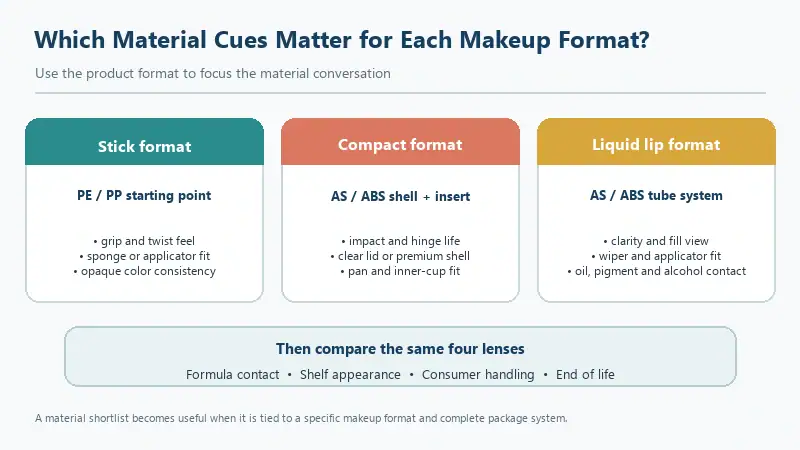
The same resin can play a different role in a stick, compact or liquid lip package. Use the format as a shortcut for the first discussion: identify the parts that need grip, clarity, impact resistance or formula contact, then compare the complete assembly across four common decision lenses.
Match the material to the makeup format
Liquid foundation and setting spray
Clear PET or PETG can help a consumer see shade, fill level and texture. A pump or spray system may use PP and other component materials even when the bottle body is PET. If the formula contains alcohol, fragrance, oils or high pigment levels, confirm the exact contact points rather than relying on a general resin chart.
Cushion and powder compacts
Cushion and powder compacts often combine an ABS or AS outer case with a pan, insert, mirror, sponge or hinge. The outer shell may be selected for impact resistance and decoration, while the inner parts need controlled fit, cleanability and reliable opening and closing. A premium finish does not remove the need to assess the complete assembly.
Lip, eye and stick packaging
Lip gloss, mascara, eyeliner, lipstick and foundation sticks place different demands on wipers, rods, mechanisms, caps and direct-contact surfaces. PP, ABS, AS and mixed-material constructions may all be useful, but the formula, applicator geometry and user handling determine the final choice.
Check appearance, decoration and formula contact
Clarity is a commercial choice. Transparent PET, PETG or AS can show color, fill level and texture, but they can also reveal sediment, air bubbles or shade variation. Opaque PP, HDPE or ABS can create a stronger color block and hide variation. Decide what the consumer should inspect before choosing the resin and finish.
Decoration can change the material decision. Silk screen, hot stamping, spray coating, frosting, metallization and labels have different adhesion and abrasion requirements. Include decoration in handling, chemical-resistance and drop reviews instead of approving the resin first and the artwork later.
A property chart is a starting point, not a guarantee. Test the exact formula in the exact component, especially when the product contains alcohol, fragrance, oils, acids, pigments or high levels of surfactants. Wall thickness and molded-in stress can change behavior even when the base resin is the same.
Consider logistics, refillability and end of life
A package may encounter warehouse heat, freezing conditions, air freight, truck vibration, drops and repeated consumer handling. Check dimensional stability, cap fit, impact resistance and appearance after the expected distribution cycle. A lightweight design can lower freight, but only if it retains enough stiffness and protection.
PCR content, refillability and simplified material structures can support a sustainability direction, but each choice affects color, odor, barrier, decoration and recycling. Specify which component carries the claim and whether the local recycling system can process the final assembly. A responsible decision balances formula protection with a credible end-of-life pathway.
Keep the shortlist component specific
Do not force one resin across every part of a makeup system. Create a shortlist for the bottle or tube, cap, pump housing, inner cup, pan, applicator and outer shell separately. Then review assembly, material separation, decoration, consumer handling and disposal together. This approach is usually more reliable than selecting one material because it sounds premium or familiar.
Questions to ask a packaging supplier
- Which grades are recommended for direct contact with the actual formula, and which are available with PCR content?
- What wall thickness, closure fit and decoration process are standard for the proposed component?
- Which filled-package checks are included with samples, and what changes require a repeat review?
- Can the supplier support stock packaging, color matching, decoration and custom development for the same project?
- What are the MOQ, mold ownership, repeat-order tolerances and change-notification rules?
How SW Packaging can support material selection
SW Packaging offers makeup formats across face, lip, eye, stick and applicator categories, together with color, printing, hot stamping and labeling options. The face packaging range includes air cushion foundation tubes, cushion compacts, foundation and concealer formats, blush and powder cases and other makeup components. Contact us with the formula, capacity and intended application.
Frequently Asked Questions
1. Is PETG always better than PET?
No. PETG may be attractive for premium clarity and impact resistance, while PET may offer a familiar cost and recycling route. The better choice depends on the component, formula, decoration and target market.
2. Which material is best for foundation packaging?
PET or PETG can suit a clear foundation body, PP can suit selected functional parts, and an air cushion sponge tube can change the user experience completely. Approve the filled assembly after reviewing formula compatibility, appearance and dispensing performance.
3. Can one makeup package use multiple materials?
Yes. Many successful systems combine a bottle or tube, pump, inner tank, cap, pan, mirror and decorative shell made from different materials. The key is to verify fit, compatibility, decoration, handling and disposal as one system.
4. Does a premium appearance justify a more complex material mix?
Only when the added material mix creates a clear benefit in protection, use or brand value. If it complicates recycling, refillability or quality control, compare that trade-off against a simpler structure before approval.
The best makeup packaging material is the one that performs the required job across the complete product life cycle: formula contact, shelf appearance, decoration, logistics, consumer use and end of life.