
A dual-ended foundation stick promises a simple routine: apply cream foundation from one end, then blend it with the sponge on the other. For a packaging buyer, however, the two ends create one connected specification. The stick must advance without breaking the formula, while the sponge must blend it without excessive absorption or streaking. Both ends also need closures that stay secure in a makeup bag.
Start by defining the format. A solid or semi-solid foundation stick sits in an inner cup and rises through a twist mechanism. A sponge-tipped liquid dispenser moves a flowing formula toward a sponge through a different delivery system. Product listings sometimes use similar names for both. Before comparing quotations, confirm which structure your formula needs.
Somewang Packaging’s dual-ended foundation stick container with sponge is a useful reference for a separate stick end and blending end. The questions below help turn that visual concept into a workable purchasing brief.
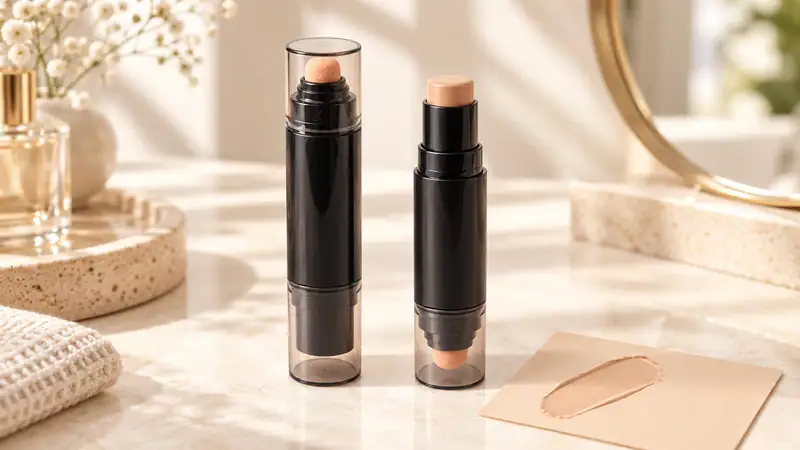
Start with the formula, not the outer shape
A cream foundation must be firm enough to keep its shape above the cup, yet soft enough to leave an even layer on skin. A very soft formula may smear inside the cap or bend during application. A harder formula may remain intact but drag across the skin and resist blending. Neither problem can be solved by choosing a more attractive outer tube.
Give the packaging supplier a practical formula brief: target fill weight, bullet diameter and height, expected hardness, oils and waxes, filling method, filling temperature, and the intended application area. Also say whether users will draw broad strokes directly on the face or place small marks for targeted blending. Those details affect cup support, extension height and sponge size.
If the formula is still changing, request package samples early but delay final approval until the near-final formula is available. A successful trial with a placeholder balm does not establish that a pigmented foundation will behave the same way.
Check the cup and twist mechanism together
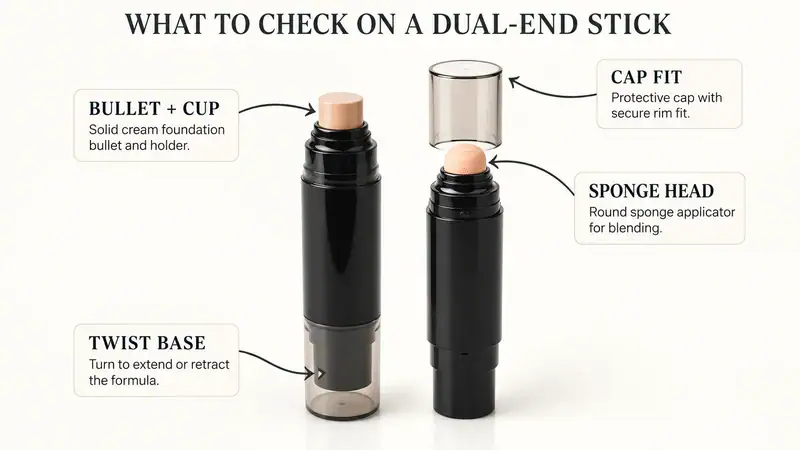
The inner cup holds the foundation bullet as it travels upward. Its fit must support the product without squeezing it so tightly that filling or use becomes difficult. The exposed bullet should be high enough for application, but excessive extension increases the chance of leaning, cracking or touching the cap.
Ask for a filled sample and check three positions: first use, roughly half used, and near the end of the pack. At each point, turn the mechanism forward and back. The movement should be smooth, the cup should not wobble, and the bullet should remain supported. Pay particular attention to whether the product retracts far enough to clear the cap.
A twist that feels smooth when empty may feel different after filling, temperature exposure or repeated use. Set an acceptable feel and travel range with your supplier using real samples rather than relying on the mechanism name alone.
Make the sponge suitable for the way the foundation transfers
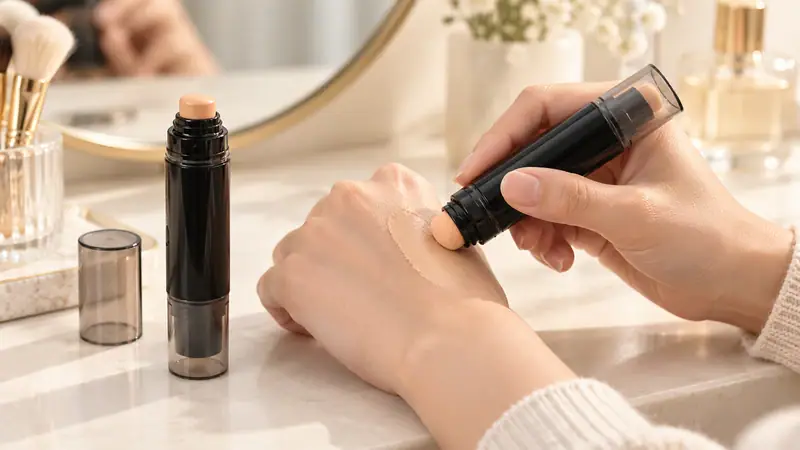
On a dual-ended stick, the sponge blends product already placed on the skin. It is not necessarily a channel that feeds liquid foundation. This distinction matters when specifying the sponge. Buyers should look at its diameter, density, resilience and exposed shape in relation to the coverage area.
A small, firm head may suit targeted concealing, while a broader, softer surface may feel better for foundation across the cheeks or forehead. Compare blending after one dab, after several passes and after the sponge has picked up more product. Watch for streaks, patchiness and the amount of formula left in the sponge.
The sponge attachment also needs attention. It should stay seated during dabbing and when the cap is removed. Check whether the protective cap touches or compresses the sponge, whether residue collects around its mounting point, and how easily the consumer can keep the applicator clean. Hygiene instructions should reflect the final sponge construction and formula rather than making a general “washable” claim.
Evaluate both caps as functional parts
A dual-ended pack often has two closures with different jobs. The stick-end cap needs enough internal clearance to avoid marking the foundation bullet. The sponge-end cap protects the applicator from dust and from staining other items during travel. Both should close consistently after repeated use.
Review cap fit with the final filled product. Foundation residue near a rim can change the closing feel; a sponge that swells or retains product may change the space available beneath its cap. Check for accidental opening in an ordinary makeup bag and for visible product transfer inside either closure.
The cap design also influences how clean the pack looks over its lifetime. A package that photographs well when empty may disappoint if the rim, sponge seat or clear cap becomes visibly coated after a few uses.
Test the complete package with the final formula
Mechanism testing and formula compatibility should use the same assembled pack the customer will receive. Include the inner cup, outer body, sponge, both caps and decoration. Keep samples in the orientations and temperature conditions relevant to your sales and shipping plan, then compare them with room-temperature controls.
A useful review covers:
- Bullet stability: leaning, cracking, sweating or softening.
- Mechanism performance: smooth travel, backlash, cup movement and complete retraction.
- Application: even payoff from the bullet and acceptable blending by the sponge.
- Cleanliness: residue around the cup, sponge seat and inside both caps.
- Material and appearance: swelling, odor, discoloration, stress marks or decoration changes.
- Repeated use: the same checks after many normal opening, closing and application cycles.
Record the formula version, fill level, storage condition and number of cycles for each sample. If the formula, sponge material or decoration changes, revisit the affected checks. This makes approval more useful than a single “passed” sample with no conditions attached.
Send a brief that suppliers can answer
When you request samples from the face packaging range, include the desired fill weight, bullet dimensions, formula type, proposed filling process, sponge use case, target finish, order quantity and launch timing. Ask the supplier which dimensions and components are standard and which require adjustment.
For a custom project, discuss color, decoration and structural changes only after the working package has been narrowed down. Somewang Packaging’s customization options can help align the final pack with a brand identity, but an approved appearance should follow an approved formula-and-package fit.
Build a Better Foundation Stick with Somewang Packaging
The best dual-ended pack makes both steps feel deliberate: the stick advances cleanly, and the sponge blends without becoming a maintenance problem. Use Somewang Packaging’s dual-ended container as a starting point, then qualify it with your own filled formula and acceptance criteria. To discuss samples and the details your project needs, contact us.
Frequently Asked Questions
- Can a liquid foundation be filled into a twist-up foundation stick?
A conventional stick mechanism is intended for a formula that can hold a bullet shape. A flowing liquid usually needs a different dispensing structure. Confirm the architecture before requesting samples.
- What matters most in foundation stick mechanism testing?
Check cup support, smooth upward and downward travel, bullet stability, full retraction and repeat-use performance with the actual filled formula.
- Does a sponge on the opposite end dispense the foundation?
Not necessarily. In a dual-ended stick, it commonly acts as a separate blending tool. A sponge-fed liquid package uses a different delivery path.
- Should the sponge be assessed with a clean sample or a used one?
Both. A new sponge shows initial feel; a repeatedly used sponge reveals product buildup, blending changes and cap-clearance issues.
- What information should go in a supplier inquiry?
Provide the formula type, fill weight, bullet size, filling conditions, sponge purpose, decoration goals, quantity and the tests required before approval.