
The dispenser is part of the makeup experience. A foundation pump controls dose, a setting-spray sprayer defines the mist, and a sponge, doe-foot or brush determines how the product reaches the skin. The best choice is not the most attractive actuator in a catalogue. It is the complete dispensing system that delivers the intended dose, feel and reliability with the final formula.
This guide explains how to choose pumps, sprayers and applicators for foundation, setting spray, concealer and other liquid makeup. Use it to create a first specification, compare supplier samples and reduce late changes to tooling or filling settings.
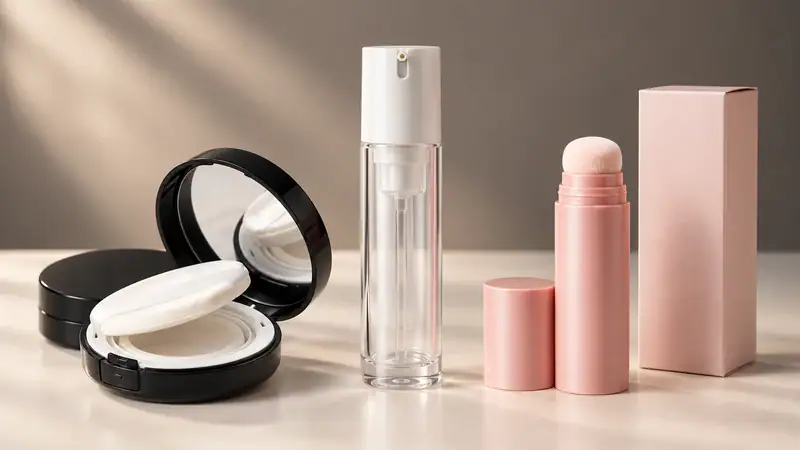
Start with the formula and the use case
Record the formula variables that affect dispensing before you shortlist components: viscosity and rheology, density, pigments or particles, alcohol, oils, fragrance, volatile solvents, solids, pH, fill volume and target dose. Viscosity is only a starting point. Two liquids with a similar measured viscosity can behave differently if one is stringy, shear-thinning, structured or prone to drying around the orifice.
Define the use case as clearly as the chemistry. Is the user dispensing onto a sponge, brush, hand or directly onto skin? Is one pump meant to cover one area, or is the user expected to build coverage? Does the product need a clean one-handed action, a portable lock or a precise line? These decisions often determine the component family before decoration or bottle shape is finalized.
Match the dispensing format to the product
The table below is a screening tool, not a substitute for filled-package testing. Use the starting point to request samples, then confirm the complete system with the final formula and filling process.
| Product or use case | Starting format | Critical checks before approval |
| Liquid foundation | Lotion pump, airless pump or sponge tube | Dose, viscosity, pigment load, priming, residual product and leakage |
| Setting spray | Fine mist sprayer | Pattern, droplet feel, output, clogging, cap protection and alcohol compatibility |
| Liquid concealer or blush | Doe-foot, precision tip or squeeze tube | Pickup, flow control, wipe-off, mess, streaking and application accuracy |
| Liquid eyeliner | Brush or precision tip | Line control, drying time, cap seal and tip stability |
| Mascara | Wand and wiper system | Loading, scraping, neck fit, repeat-use performance and cleanup |
| Travel or sample pack | Mini pump, spout or squeeze format | Portability, cap retention, pressure-change leakage and component count |
Know what each component is good at
Lotion or treatment pumps
A standard pump is a practical starting point for low- to medium-viscosity foundation and other liquid makeup when the brand wants a measured dose and a familiar hand action. Confirm output per stroke, actuation force, dip-tube fit, priming strokes and the amount left at the end of the pack. Pigments and powders can increase clogging risk, so catalogue compatibility is not enough.
Airless pumps
Airless packs can support controlled dosing and reduce repeated air exchange with the bulk product. They can be useful for formulas that are sensitive to exposure or for brands that want a clean, premium dispensing experience. Airless does not mean universally compatible: the piston, valve, output and filling process still need to match the formula, and the package must dispense reliably near empty.
Fine mist sprayers
A setting spray should create a consistent, comfortable mist rather than a wet stream. Evaluate spray width, pattern symmetry, droplet feel, output per actuation, priming, recovery after release and the risk of drying or clogging at the nozzle. Alcohol, polymers, salts, fragrance and suspended particles can change the spray over time, so test the exact finished formula.
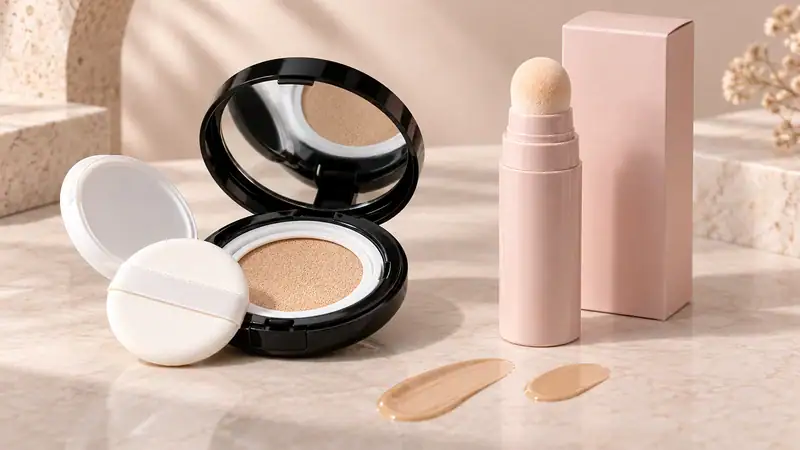
Sponge, cushion and squeeze applicators
An integrated sponge or cushion can make foundation or primer portable and reduce the need for a separate tool. The tradeoff is that the applicator becomes part of the hygiene, cleaning and repeat-use experience. Check transfer, streaking, absorption, drying time, washability and whether the sponge becomes blocked by a high-solid or high-pigment formula.
Doe-foot, brush and wand systems
A doe-foot supports soft, targeted placement; a brush tip supports precision; and a mascara wand relies on the wiper to control loading. Match the wiper opening and tip geometry to the formula rather than selecting by appearance. Test pickup, wipe-off, application accuracy, cap seal and the change in performance after repeated opening and closing.
Define performance in measurable terms
Translate the desired consumer experience into a short component specification. Record the target output per actuation, acceptable variation, actuation force, priming strokes, recovery after release, spray width, residual product and allowable leakage. For applicators, add pickup, transfer, streaking, drying, cleaning and the number of repeat uses before the result changes.
Evaluate first use, mid-life and last use separately. A pump may prime well but deliver less at low fill levels. A sprayer may look fine on day one but develop a coarse pattern after the formula dries around the orifice. These are user-visible failures, even when a single laboratory output measurement passes.
Test the complete formula and package
Compatibility is a system question. Test the bottle or tube, closure, actuator, gasket, dip tube, spring-adjacent parts, wiper or sponge and decoration that will be sold. Check for odor transfer, color change, separation, swelling, brittleness, stress cracking, label or decoration damage, mass loss and changes in viscosity or spray behavior.
Run filled samples through the conditions relevant to the launch: room-temperature storage, thermal cycling, orientation changes, vibration, drop or transport testing and repeated actuation. Keep an inert formula control where useful, and compare the package at the beginning, middle and end of the test. If the formula, material, decoration or filling process changes, treat the previous result as requiring review rather than automatic approval.
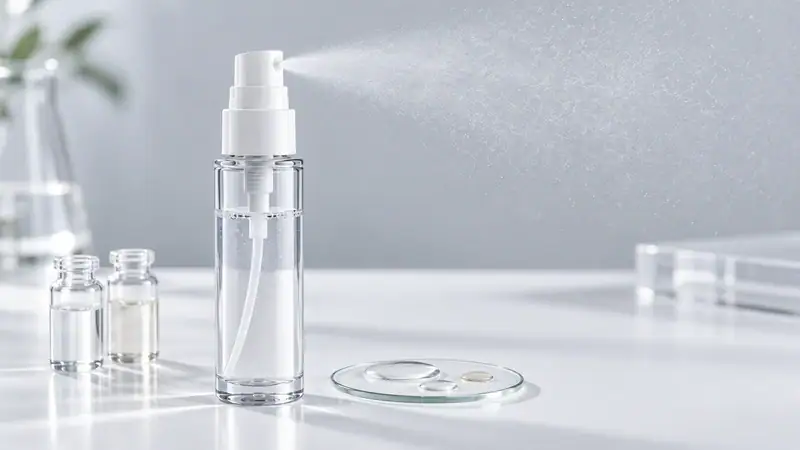
Design for filling, assembly and transport
The component must work on the production line as well as in a hand test. Confirm neck finish, closure dimensions, crimping or screw-on method, dip-tube cut length, pump insertion force, cap fit, torque or application settings and inspection access. Retain golden samples and define incoming and in-line checks for output, actuation force, spray pattern, cap fit, appearance and leakage.
For travel makeup, test the closed pack in multiple orientations, after vibration and after a drop. Check cap retention and accidental actuation. Air transport can create pressure changes, so include a pressure or altitude simulation when the package is intended for air shipment or portable retail use.
Balance performance, cost and sustainability
Compare more than the unit price. Include component count, material mix, decoration, freight volume, assembly labor, minimum order quantity, tooling, filling changes and the cost of failure or rework. A premium actuator may support a stronger application story, while a simpler pump or squeeze format may reduce cost and material complexity. Make the tradeoff explicit in the product brief.
For sustainability, ask how many materials are used, whether the spring or applicator can be separated, whether recycled or bio-based content is available, and whether the package can be emptied efficiently. Avoid treating a single material claim as a universal recyclability result; local collection and the full component design still matter.
Supplier sample checklist
Before approving a pump, sprayer or applicator, request the following information and samples:
- Recommended viscosity or rheology range and known limits for pigments, particles, alcohol, oils and fragrance.
- Output per stroke, tolerance, priming strokes, actuation force, dip-tube options and end-of-pack performance.
- Neck finish, closure dimensions, spring location, material declaration and every surface that contacts the formula.
- Assembled empty samples plus filled or fillable samples using the intended formula and target dose.
- Cap, lock or overcap options and results from leakage, drop, vibration and pressure-change testing.
- Custom color, decoration, tooling, minimum order quantity, lead time and production inspection plan.
Build the right dispensing system with SW Packaging
SW Packaging combines face packaging with pumps, sprayers, sponge components and other applicators. Explore the Applicators and Accessories collection and the Face Packaging collection . The 30 ml air-cushion foundation tube is one example of a package that combines dispensing and application. For samples, component matching or custom development, contact Swpackaging with your formula and target dose.
Frequently Asked Questions
1. What pump is best for liquid foundation?
A lotion pump, airless pump or sponge applicator can work. The right choice depends on viscosity, rheology, pigment load, air sensitivity, target dose and the application experience. Approve it only after testing the filled package.
2. What is the difference between a lotion pump and a fine mist sprayer?
A lotion pump delivers a measured stream or dose. A fine mist sprayer atomizes the formula into smaller droplets through a different valve and actuator design. They should not be substituted without formula-specific testing.
3. How do you test a cosmetic sprayer?
Measure priming, output, spray width and pattern, droplet feel, actuation force, clogging, leakage, cap fit and performance after storage, thermal cycling and repeated use. Use the final formula, not water alone.
4. Should I choose airless packaging automatically?
No. Airless can help with controlled dosing and reduced repeated air entry, but it still has to match the formula, piston movement, output and filling process. Test near-empty performance and compatibility before committing to tooling.