
Many airless systems use a piston or similar internal mechanism to move the formula upward as you dispense it. A well-designed airless system can reduce repeated exposure of the remaining formula to outside air during dispensing and provide controlled product delivery.
However, you still need to consider viscosity, capacity, pump output, material, filling method, decoration, and formula compatibility. This airless packaging sourcing guide shows you what to evaluate before selecting a package.
How to Select Airless Packaging for Your Skincare Formula
Start With the Formula, Not the Bottle Design
A beautiful airless bottle is useless if it does not dispense your formula correctly.
Before requesting samples, give your packaging supplier basic information about the product:
- Formula type
- Viscosity
- Filling volume
- Filling method
- Expected dose per use
- Target market
- Required decoration
A lightweight serum may need different dispensing performance from a thick moisturizer.
You should therefore test the formula with the complete pump system before approving mass production.
Choose the Right Capacity for the Application
Capacity should reflect how consumers will use the product.
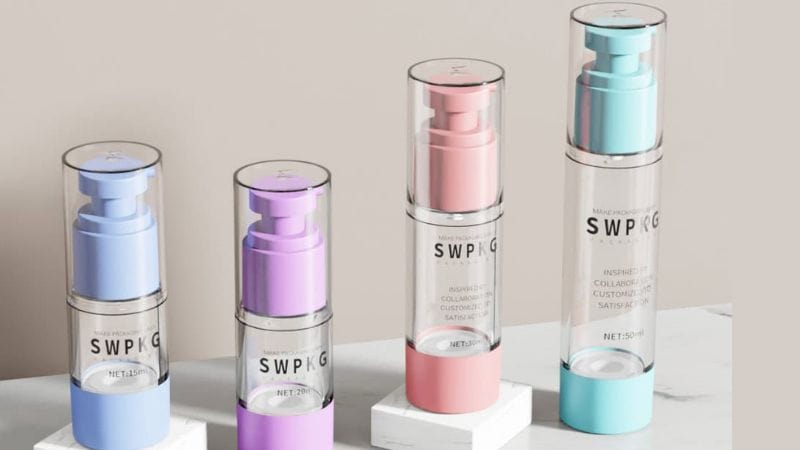
Small formats such as 5 ml, 15 ml, or 20 ml can suit eye treatments, concentrates, samples, or travel products. A 30 ml package is common for facial serums and targeted treatments. Larger 50–150 ml formats can work for lotions, moisturizers, sunscreens, and body-care formulas.
If your brand has several related products, consider using the same packaging family in several capacities. This can create stronger shelf consistency without developing a different design for every SKU.
Compare PP, AS, PETG, Acrylic, and Other Materials
Material affects appearance, weight, decoration, and packaging strategy.
PP is a practical choice when you want lightweight plastic packaging. A full-PP structure can also be useful when your sustainability strategy favors a simpler material system.
AS can provide a clear, glass-like appearance while remaining plastic. Somewang uses AS across several premium-looking airless bottle designs.
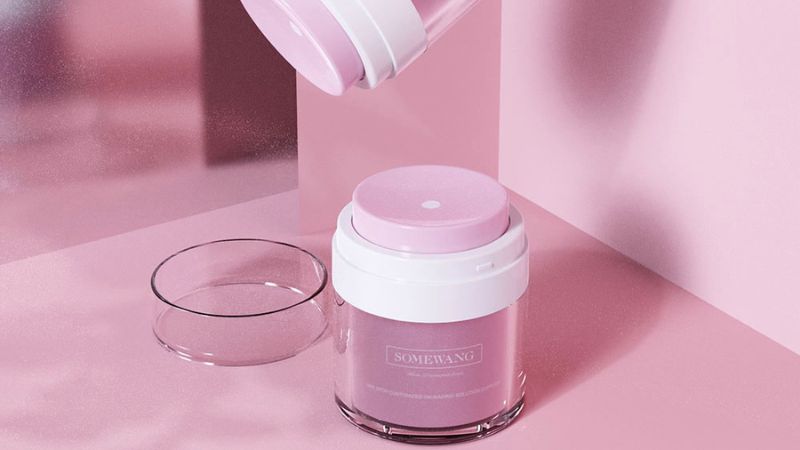
Acrylic is often selected when visual weight and a luxury appearance are important. Somewang, for example, offers acrylic airless pump jars in 15 ml, 30 ml, and 50 ml sizes.
Test material against your formula, decoration requirements, logistics, and target-market expectations.
Consider the Pump and User Experience
The dispenser is just as important as the bottle.
Ask about:
- Pump dosage
- Number of priming strokes
- Dispensing consistency
- Actuator size
- Leakage resistance
- Residual product
- Locking or protective features
If your product is used around the eyes, a treatment-style actuator may give you a different consumer experience from a standard lotion pump.
For creams, you can also consider an airless jar instead of a traditional open jar. This allows consumers to dispense the product without repeatedly dipping their fingers into the main container.
| Selection factor | What you should check | Why it matters |
| Formula | Viscosity and ingredients | Affects dispensing compatibility |
| Capacity | 15 ml, 30 ml, 50 ml, etc. | Matches product usage |
| Material | PP, AS, PETG, acrylic, etc. | Affects appearance and structure |
| Pump | Output and actuator design | Controls dispensing experience |
| Decoration | Color, printing, hot stamping | Builds brand identity |
| Refillability | Replaceable inner component | Supports refill strategies |
| MOQ | Quantity per SKU | Affects launch investment |
| Testing | Formula and package testing | Reduces production risk |
How to Source Airless Packaging From the Right Manufacturer
Request Samples and Test Them With Your Formula
Request samples and fill them with the actual skincare formula whenever possible.
You should test:
- Dispensing
- Leakage
- Formula compatibility
- Pump recovery
- Closure fit
- Decoration durability
- Drop performance
- Transportation performance
Somewang produces and tests samples before mass production. Our production process also includes inspection during manufacturing and random inspection before packing.
Testing is particularly important for thick creams and high-viscosity formulas. A pump that works perfectly with a light lotion may behave differently with a dense cream.
Decide Between an Existing Mold and Custom Airless Packaging
If you need a faster launch, start by reviewing existing airless packaging.
You can then customize the appearance through color, silk-screen printing, hot stamping, labels, frosted effects, and other decoration methods.
If existing packaging cannot meet your requirements, you can develop a custom mold.
Custom molding makes more sense when the package shape or function is an important brand asset and your expected volume justifies the additional development work.
Consider Refillable and Simpler Material Options
Airless packaging can also be part of your sustainability strategy.
Somewang’s sustainability includes PCR, bio-based, recyclable, and refillable packaging directions.
A refillable structure allows consumers to retain part of the outer package and replace the inner container.
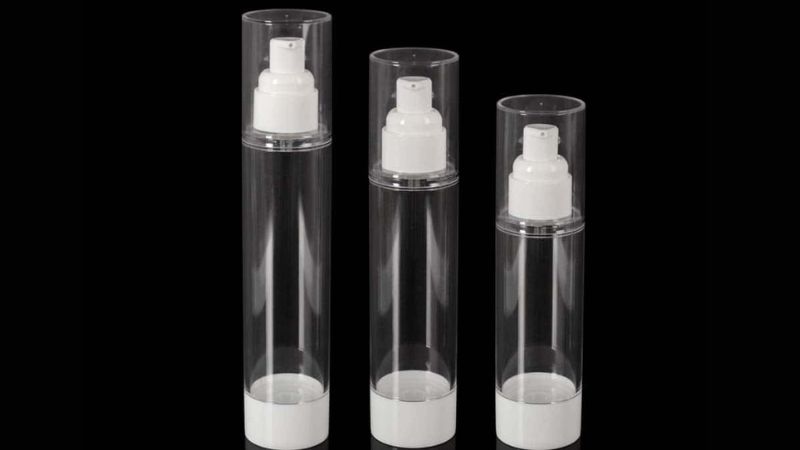
A full-PP airless bottle may be another option when you want to simplify the material structure.
Recommended Somewang Airless Packaging Options
If you are comparing existing molds, these products provide useful starting points:
- 15 ml / 30 ml / 50 ml Full-PP Airless Bottle
A PP airless option for skincare brands that prefer a simpler plastic material structure. The product supports custom colors and decoration, with free samples listed as available. - 15 ml / 20 ml / 30 ml / 50 ml AS Airless Pump Bottle
A clear AS series suitable when you want a more premium, transparent appearance. It supports customized colors, silk-screen printing, hot stamping, and labeling. - 50 ml / 75 ml / 100 ml PP Airless Bottle
A useful option for moisturizers, lotions, emulsions, and other products that require larger capacities. Custom decoration and OEM/ODM development are available. - 40 ml / 80 ml / 120 ml Refillable AS Airless Bottle
Worth considering when refillability is part of your packaging concept. The range uses AS material and supports custom colors and logo decoration. - 15 ml / 30 ml / 50 ml Acrylic Airless Pump Jar
A premium-looking option for face creams and other products where you want the appearance of a luxury jar with an airless dispensing format.
Source Airless Packaging From Somewang
Somewang has built manufacturing capabilities across injection and blow molding, pumps and sprayers, tubes, R&D, and customized packaging development since 2006. This matters for airless projects because the package is a system. You may need coordination between the container, pump, decoration, tooling, samples, and final assembly.
We support both existing airless designs and new OEM/ODM development. Our custom process includes engineering drawings, 3D mock-ups, mold development, decorated samples, production, printing, labeling, and assembly.
If you are developing a serum, eye treatment, moisturizer, sunscreen, or other skincare product, our team can help you compare existing airless packages with a custom development project.
Contact us today for samples and a project quotation.
Frequently Asked Questions
What Skincare Products Are Suitable for Airless Packaging?
Airless formats can be considered for serums, lotions, moisturizers, eye treatments, sunscreens, foundations, and other formulas that suit pump dispensing.
The final decision should depend on viscosity, filling method, formula compatibility, and required dose.
Is an Airless Bottle Better Than a Regular Pump Bottle?
Not always. A regular pump bottle may be sufficient for many products. Airless packaging becomes more attractive when you want controlled dispensing, reduced repeated air entry during use, or a premium packaging format.
You should compare both systems with your actual formula.
What Capacity Should You Choose?
Small 5–20 ml formats can work for eye care, concentrates, and samples. Around 30 ml is common for serum-style products, while 50 ml and larger formats can suit moisturizers, lotions, and body-care products.
Your usage rate and intended retail period should guide the choice.
Are Airless Bottles Refillable?
Some are and some are not. If refillability is important, select a structure designed specifically with a replaceable inner component. Do not assume a standard airless bottle can simply be converted into a refill system.
Can You Customize an Existing Airless Bottle?
Yes. Depending on the model, Somewang supports options such as custom colors, silk-screen printing, hot stamping, labels, frosted finishes, and logo printing.
If you need a new structure or proprietary shape, you can also evaluate custom mold development.