
Stock cosmetic packaging uses an existing bottle, jar, tube, compact, or other package that is already available from the manufacturer. You customize it mainly through color, printing, labeling, hot stamping, or other decoration.
Custom molding gives you more control over the package itself. You can develop a unique shape, capacity, structure, dispensing system, or other features around your brand.
If you are unsure which route to take, this guide will help you compare stock cosmetic packaging vs custom molding.
What Is the Difference?
Stock Packaging Helps You Launch Faster
Stock packaging is often the simplest option when you are preparing a new product.
The mold already exists. You do not need to begin with a completely new structural design.
You can select a suitable package and then customize features such as:
- Color
- Logo
- Printing
- Label
- Hot stamping
- Surface finish
- Cap or pump
- Secondary box
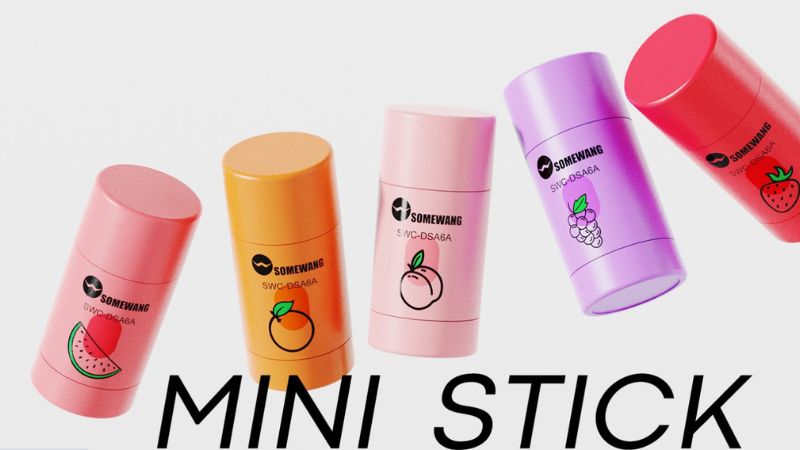
Somewang offers a broad cosmetic packaging catalog covering bottles, jars, tubes, airless containers, pumps, deodorant packaging, skincare packages, and makeup formats.
Stock packaging is particularly useful when:
- You are launching a new brand
- Your initial order volume is limited
- You need to enter the market quickly
- You want to test consumer demand first
- The package itself does not need a unique function
You can still create a distinctive appearance through decoration. The main limitation is that another brand may be able to use the same basic container.
Custom Molding Gives You More Brand Differentiation
Custom molding starts from your own packaging requirements.
Instead of adapting your brand to an existing bottle or jar, you can develop the packaging around the product.
Somewang’s custom packaging service includes a development process covering initial concepts, 2D specifications, 3D rendering, mock-ups, mold making, decorated pre-production samples, manufacturing, printing, labeling, and assembly.
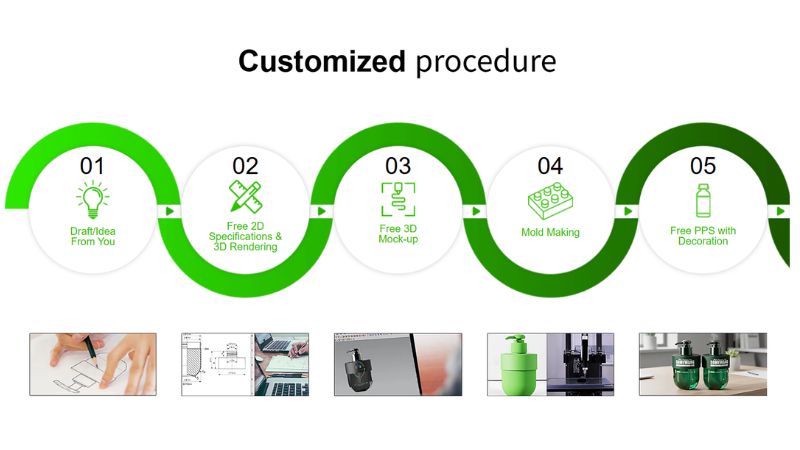
Custom molding allows you to control elements such as:
- Package shape
- Capacity
- Dimensions
- Neck design
- Wall structure
- Grip or ergonomic details
- Closure integration
- Decorative features
- Brand-specific shapes
For example, a distinctive serum bottle or foundation stick can make your product easier to recognize on a shelf or in social-media content.
However, a custom package needs more development work. You should allow time for drawings, prototypes, mold production, samples, testing, adjustments, and final approval.
The Cost Structure Is Different
Stock packaging normally avoids the cost of developing a completely new primary mold.
Custom packaging usually requires an upfront tooling investment.
You should therefore compare the total project cost, not only the final price per package.
| Factor | Stock Packaging | Custom Molding |
| Tooling investment | Usually low or none for the main package | New mold normally required |
| Development time | Shorter | Longer |
| Design freedom | Limited to existing structure | High |
| Branding | Mainly color and decoration | Structure + decoration |
| Initial risk | Lower | Higher upfront commitment |
| Market differentiation | Moderate | Strong |
| Small launch suitability | Usually better | Depends on volume and budget |
| Proprietary functions | Limited | Easier to develop |
| Future repeat orders | Simple once selected | Strong after tooling is finalized |
Custom molding does not mean the final unit price will always be higher. At sufficient volume, tooling becomes one part of a larger production program.
You should ask the manufacturer to quote tooling separately from production so you can understand the investment clearly.
How Should You Decide Which Packaging Route Is Right for Your Brand?
Choose Stock Packaging When You Are Testing the Market
If you are launching your first skincare or makeup product, you may not know how quickly it will sell.
In this situation, tying a large budget to custom tooling may not be necessary.
You can choose an existing package, develop strong branding around it, and test demand.
Stock packaging can also be useful when your product launch date is close.
You still need time for samples, formula compatibility, decoration approval, production, and transportation, but you remove one major development stage: creating the primary mold.
Choose Custom Molding When Packaging Is Part of Your Brand Asset
As your brand grows, packaging can become part of what customers recognize.
Think about the silhouette of the bottle, the way a compact opens, or the shape of a lipstick package.
If your packaging needs to be difficult to imitate visually, existing stock shapes may not be enough.
Custom molding can also solve functional problems.
You may need:
- An unusual fill volume
- A special applicator
- A specific internal structure
- A different neck
- A unique cap
- Better product dispensing
- Packaging designed as a family across several SKUs
This makes custom molding more attractive when you already have clear sales forecasts and expect to reorder the package for several years.
Consider a Hybrid Strategy
A hybrid strategy can often be more practical.
For example, you might use:
- A custom serum bottle as your hero package
- A stock toner bottle with matching colors
- A stock cream jar with custom decoration
- An existing airless package for eye cream
- Custom secondary boxes across the whole range
This lets you invest your tooling budget where differentiation matters most.
You can also use existing packaging during your first launch and develop a custom version once sales become predictable.
Test Both Options With Your Real Formula
Whether you choose stock or custom packaging, you still need physical testing.
Check:
- Formula compatibility
- Leakage
- Pump performance
- Closure fit
- Drop resistance
- Decoration
- Filling process
- User experience
- Transportation performance
For custom projects, the mold sample is especially important. A 3D rendering can show shape and proportion, but it cannot fully prove dispensing, sealing, or production performance.
Work With a Manufacturer That Can Support Both Routes
Somewang focuses on packaging manufacturing and R&D for beauty, cosmetics, healthcare, and household products. Our production capabilities include injection and blow molding, pumps and sprayers, tubes, product development, and packaging customization.
You can begin by selecting a stock product and move toward custom tooling as your packaging requirements become more sophisticated. Our team can help you compare available molds with a fully customized development project.
Contact us today to discuss your project.
Frequently Asked Questions
Is Stock Cosmetic Packaging the Same as Ready-Made Packaging?
Generally, stock packaging refers to an existing packaging design for which the main production tooling already exists.
You can normally customize colors, logos, printing, labels, and other decorative details without developing an entirely new container mold.
Is Stock Packaging Only Suitable for Small Brands?
No. Large brands also use existing packaging when speed, cost efficiency, or functionality matters more than a proprietary shape.
You can still create a premium result through color, decoration, closures, applicators, and secondary packaging.
When Should You Invest in a Custom Mold?
Custom molding makes more sense when your expected volume can justify the tooling investment and the unique structure creates clear value.
That value may come from branding, functionality, ergonomics, a proprietary dispensing system, or a coordinated packaging family.
How Long Does Custom Cosmetic Packaging Take?
There is no single development time for every project.
The schedule depends on design complexity, engineering revisions, prototype development, mold construction, samples, decoration, testing, and final approval.
Ask your supplier for a project schedule before you confirm tooling.
Can You Customize a Stock Package Without Making a New Mold?
Yes. Depending on the product, you may be able to change colors, printing, labels, hot stamping, coatings, or decorative finishes without changing the primary mold.
This is often a useful middle ground between completely standard packaging and full custom development.
What Should You Send Somewang Before Choosing Stock or Custom Packaging?
Send your product type, formula, capacity, desired packaging format, quantity, reference images, decoration requirements, budget range, and launch date.