
Launching a beauty brand in 2026 needs a clear customer, a focused product range, and packaging that supports your positioning.
The beauty market is demanding more from new brands. Price and value remain important, while packaging is moving toward stronger visual differentiation, refillable concepts, simpler material structures, and more intentional design.
This guide explains how you can move from an idea to a launch-ready beauty line and how Somewang can support your packaging development along the way.
Start With a Clear Beauty Brand and Product Strategy
Define Who You Are Selling To
Before choosing your bottle or lipstick tube, define your customer.
Ask yourself:
- What problem does your product solve?
- Who is most likely to buy it?
- What price range are you targeting?
- Will you sell online, through retailers, salons, or distributors?
- What makes your product different?
- Which market will you launch first?
Your positioning affects almost every packaging decision.
A mass-market skincare brand may prioritize lightweight packaging and cost efficiency. A premium serum brand may prefer thick-wall bottles, glass-like materials, metallic decoration, or an airless system.
Consumers are still highly aware of value in 2026. It means the formula, packaging, price, and brand story should make sense together.
Launch With a Focused Product Range
Starting with a small group of hero products can make sourcing easier. You reduce the number of formulas, molds, decorations, MOQs, and production schedules you need to manage.
For a skincare brand, your initial range might include:
- Serum
- Moisturizer
- Cleanser
- Sunscreen
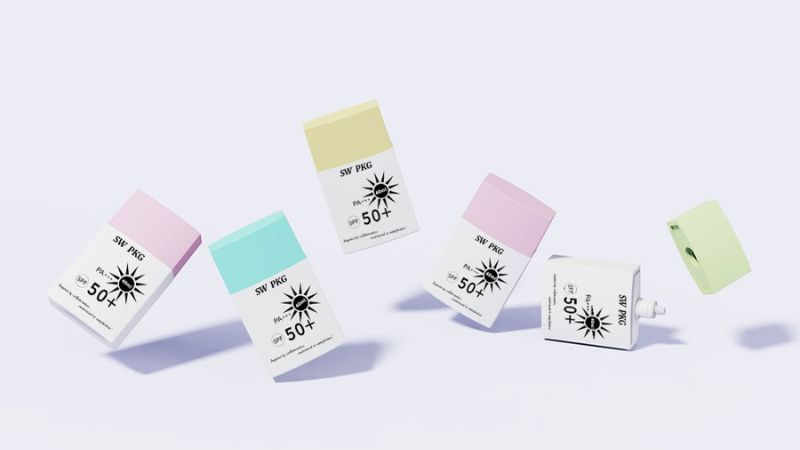
For makeup, you might start with:
- Lip product
- Mascara
- Foundation or concealer
- One color product
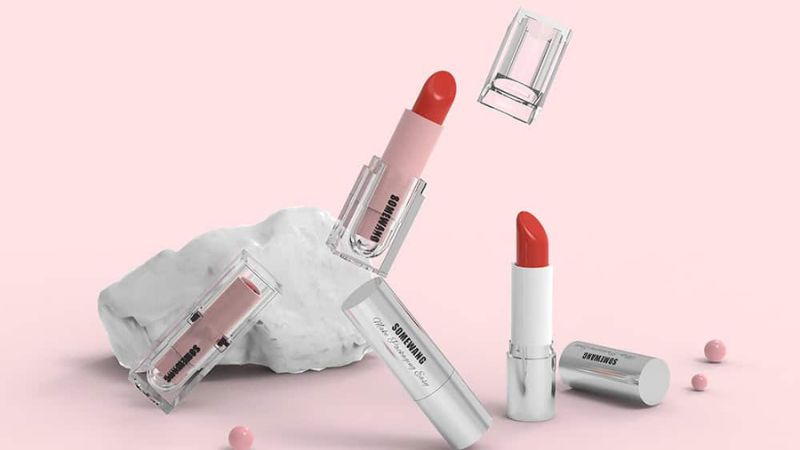
You can explore Somewang’s existing skincare packaging and makeup packaging before deciding which packaging formats fit your first product line. Somewang offers packaging across skincare bottles, airless systems, jars, sunscreen formats, lipstick, mascara, foundation, and others.
Decide What Your Brand Should Look Like
Your packaging should communicate your positioning before the customer reads the product description.
You should define:
- Core colors
- Logo placement
- Matte or glossy finish
- Minimalist or decorative style
- Plastic, glass, or mixed-material appearance
- Refillable or conventional structure
- Stock or custom shape
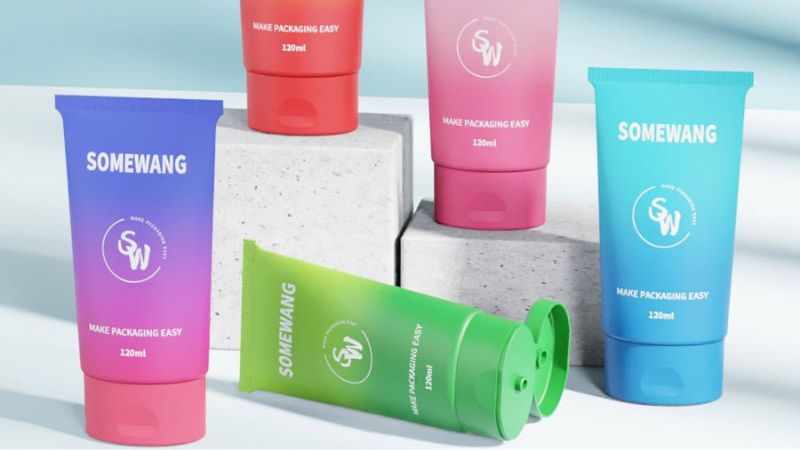
Current beauty-packaging trends are combining sustainability with tactile finishes, visual impact, and intentional design.
Turn Your Beauty Concept Into Real Packaging
Choose Stock Packaging or Custom Molding
Stock packaging is usually the lower-risk starting point.
The main mold already exists, so you can focus on color, printing, coating, hot stamping, labels, and secondary packaging.
Custom molding gives you greater control over the package itself. It makes sense when shape, functionality, or user experience is central to your brand.
Somewang supports both approaches. You can start with the existing Somewang product catalog or use its custom packaging development service for a proprietary design.
A practical decision framework is:
| Launch situation | Packaging approach |
| First product with uncertain sales | Stock packaging |
| Fast launch needed | Stock packaging |
| Small initial product range | Stock + custom decoration |
| Strong proprietary brand identity | Custom mold |
| Unique dispensing requirement | Custom development |
| Established sales forecast | Custom packaging becomes easier to justify |
| Several coordinated SKUs | Mix stock and custom strategically |
A custom hero package combined with well-decorated stock packaging for secondary SKUs can control development costs while maintaining differentiation.
Match Packaging to the Formula
A lightweight serum, thick moisturizer, sunscreen, liquid foundation, and lip gloss all require different dispensing systems.
Before selecting the final package, tell your supplier about:
- Formula type
- Viscosity
- Capacity
- Filling process
- Dispensing requirement
- Target market
- Expected product use
Then test the package with the real formula.
For formulas suited to controlled dispensing, you can browse Somewang’s airless packaging range. The range currently covers PP, AS, PETG, HDPE, glass, refillable structures, and several capacities.
Think About Sustainability Early
You can evaluate:
- Mono-material structures
- PCR plastic
- Refillable packaging
- Lightweight designs
- Glass
- Aluminum
- Reduced secondary packaging
Somewang has a sustainable packaging platform and also provides PCR-related packaging options.
Refillability is especially worth considering when customers are likely to repurchase the same product. However, the refill must remain convenient and economical. Recent reporting on refillable beauty shows that convenience, price, and product category strongly affect consumer adoption.
Recommended Somewang Packaging for a New Beauty Brand
If you are still building your first range, these existing products are useful starting points:
- 15ml / 30ml / 50ml Full-PP Airless Bottle
Suitable for serums, lotions, and facial treatments where you want an airless format and a simpler PP-based structure. - 20ml / 30ml PET Thick-Wall Dropper Bottle
A useful option for serums and facial oils when you want the visual weight of a thicker bottle with a dropper format. - 30ml / 50ml Double-Wall Cream Jar
Suitable for moisturizers and face creams. The two available capacities can also help you create travel and full-size versions within one packaging family. - Luxury Foundation Stick With Sponge Applicator
A useful starting point if your launch includes foundation, concealer, contour, or another stick-format makeup product. The package combines the stick container with an application sponge.
You can also browse Somewang’s lip packaging and mascara packaging if your initial range is more makeup-focused.
Move From Samples to a Launch-Ready Beauty Brand
Build Your Launch Around Approval Stages
Your process should move through clear approvals:
| Stage | What You Should Confirm |
| Brand concept | Customer, price and positioning |
| Formula | Texture, viscosity and compatibility |
| Packaging selection | Material, capacity and dispenser |
| Design | Color, logo and decoration |
| Prototype/sample | Appearance and dimensions |
| Compatibility test | Formula + complete package |
| Pre-production approval | Final decorated package |
| Mass production | Approved specification |
| Inspection | Quality before shipping |
| Launch | Filling, logistics and sales |
This structure also gives you clear points where changes can still be made without disrupting the complete project.
Choose a Supplier That Can Grow With You
A successful beauty brand may later add different capacities, refill formats, new colors, makeup categories, or custom molds.
Somewang focuses on packaging manufacturing and R&D across beauty, cosmetics, personal care, healthcare, and household applications. If you are planning to launch a beauty brand in 2026, send Somewang your product list, formula types, capacities, reference designs, quantities, decoration requirements, sustainability goals, and target launch date. Our team can help you move from packaging selection to custom development, samples, tooling, decoration, and production.
Browse the full Somewang packaging collection or contact us to start your packaging project.
Frequently Asked Questions
Should You Start With Skincare or Makeup?
Choose the category where you have the clearest customer, formula advantage, and market positioning. A focused launch is usually easier to source and communicate than a large mixed range.
How Many Products Should a New Beauty Brand Launch?
There is no fixed number. Start with enough products to communicate your concept without creating unnecessary inventory and sourcing complexity.
One strong hero product supported by a few complementary SKUs can be a practical starting structure.
Should You Use Stock or Custom Packaging?
Use stock packaging when speed, lower development risk, and market testing are priorities.
Consider custom molding when your packaging shape or function is an important brand asset and your expected volume can justify the development investment.
Do You Need Formula Compatibility Testing?
Yes. Test the actual formula with the final bottle, jar, pump, closure, gasket, applicator, and other contact components before mass production.
Should a New Beauty Brand Choose Sustainable Packaging?
Sustainability should be evaluated from the beginning, but the solution must still protect the formula and work for your customer.
You can compare refillable, PCR, mono-material, lightweight, glass, and other options instead of forcing every product into one sustainability strategy.