
A mascara tube can look perfect in a product photo and still fail when it meets the formula. A brush may pull out overloaded, a wiper may leave residue around the neck, or a cap may loosen after repeated use. For beauty brands and purchasing teams, the safest way to source mascara packaging is to approve the container, applicator, wiper and closure as one working system.
This guide explains what to specify, what to test with your actual formula, and what to include in a supplier brief before you place a production order.
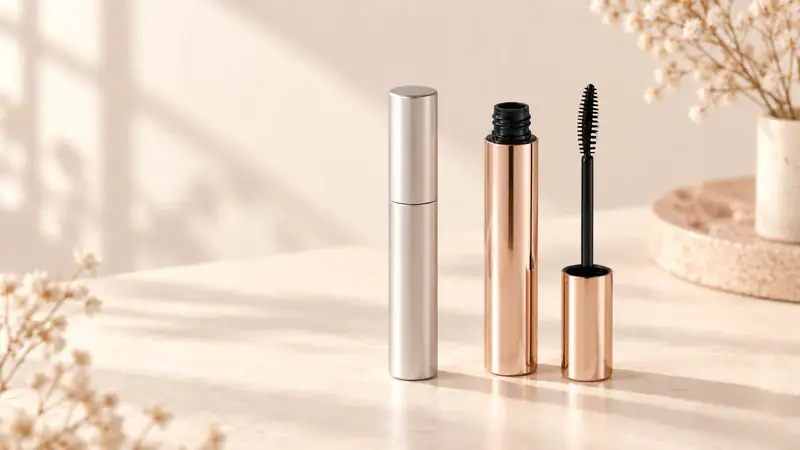
Understand the Complete Mascara Packaging System
A typical pack has a bottle, cap, stem or wand, brush and wiper. The bottle holds the formula. The cap and neck provide the closing interface. The stem positions the brush inside the bottle, while the wiper removes excess product as the brush is withdrawn.
Each part affects another. A new brush diameter changes how it passes through the wiper. A different stem changes wiping and insertion feel. A change in the bottle neck can affect wiper retention and cap fit. Review assembled samples rather than choosing each component independently from a catalogue.
Start With the Formula and Desired Lash Effect
Before comparing tube shapes, describe the product inside. Is the formula intended for volume, length, separation or a natural finish? Is it a conventional, waterproof, fiber or tubing mascara? Its viscosity and drying behavior influence how easily the brush picks up and releases product.
Ask your filling partner to provide a representative bulk sample early in development. Empty packaging samples can show color, dimensions and decoration, but they cannot prove that a wiper meters your formula correctly. If the formula is still being adjusted, record its current version and repeat critical checks once the final bulk is approved.
Choose the Brush for Application, Then Check Its Fit
Twisted wire fiber brushes and molded plastic or elastomer brushes can both work well, but they produce different application experiences. A larger, denser brush may support a fuller look; a slim or tapered brush may give more control at the inner corners or lower lashes. Those are starting points, not guarantees. The formula and wiper influence the amount actually delivered to the lashes.
When requesting brush options, compare head length, maximum diameter, bristle density, shape and flexibility. Also check the stem length. The brush should reach the product without scraping the bottom, and it should pass through the neck without excessive force or bent bristles.
Do a side-by-side trial with the intended formula. Record the first pull, product load at the tip, lash separation, clumping and whether a second dip is needed. Ask several evaluators to use the same application method so their feedback is comparable.
Change one variable at a time during early trials. If you compare three brushes, keep the formula, tube and wiper fixed for the first round. You can then adjust the wiper for the shortlisted brush. This makes it easier to identify what improved the result.
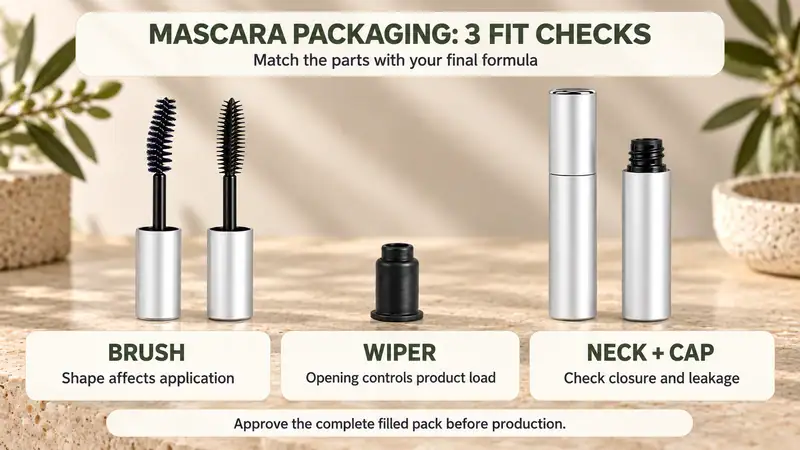
Match the Wiper to the Brush and Stem
The wiper is a small insert with a large effect on performance. Its opening, shape and flexibility influence how much product stays on the brush and how clean the stem looks after withdrawal. A loose fit may leave too much product and a messy neck. An overly restrictive fit may strip the brush, deform bristles or make the wand hard to remove.
Do not specify the wiper opening by brush diameter alone. The stem also passes through it, and the bulk formula changes wiping behavior. Request the brush, stem, wiper and bottle as an assembled sample. Check withdrawal and reinsertion repeatedly, including after product has accumulated around the neck.
The wiper also needs to remain seated during normal use. Look for movement, lifting or product collecting beneath its rim. If you change brush geometry or formula viscosity late in development, repeat the wiper trial before signing off.
Check the Neck Seal and Closure
A clean first opening does not prove that a mascara pack will stay closed through shipping and daily use. Check the bottle thread, cap engagement and the surfaces that form the seal. The cap should close consistently without cross-threading or unusual force, and the wand should remain aligned when it is tightened.
Test filled samples upright, on their sides and inverted under conditions agreed with your quality team. Inspect for seepage, neck residue and changes in closing feel. Cycle the cap repeatedly, then repeat the checks. Product buildup can interfere with the closing interface even when the original empty assembly felt sound.
Document the approved combination of bottle, wiper, stem, brush and cap. A visually similar substitute from another mold may fit differently, so component changes should trigger a fresh assembly and leak check.
Specify Usable Fill Volume, Not Just Tube Capacity
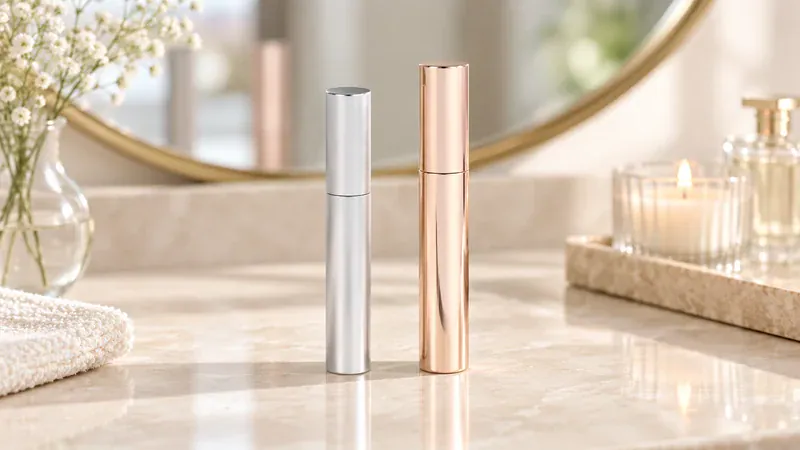
A capacity number on a product page is a useful starting point, but your labeled fill needs to be confirmed with the actual components and formula. The inserted brush and stem displace space, and the pack needs enough headspace to accept the wand without pushing bulk into the neck. Formula density also matters when your filling line controls quantity by weight.
For example, Somewang Packaging lists both a 6 ml mascara tube with brush options and a 10 ml mascara tube. Treat these as candidate formats, then ask your filler to verify the target fill quantity, fill level and assembly behavior for your formula. A larger bottle is not automatically the better choice if the brush becomes poorly loaded near the end of use.
During a filling trial, check fill accuracy, wiper insertion, overflow, final appearance and brush reach. Confirm the finished unit’s net contents using the method agreed with your regulatory and filling teams.
Approve Filled Samples Before Production
A short, documented test plan makes supplier comparisons more useful. At minimum, evaluate:
- Pickup and application: Is the brush load consistent from the first use through repeated dips?
- Wiping: Is the stem acceptably clean, and does the brush retain the intended amount of formula?
- Closure and leakage: Does the cap close consistently after repeated cycles and storage in different orientations?
- Compatibility: Do the formula and contact parts show swelling, discoloration, odor change or altered performance over the intended test period?
- Decoration: Does printing or coating remain acceptable after handling and the agreed exposure tests?
Set pass criteria with your brand, filler and supplier before testing. Keep an approved filled sample as the production reference, and record the component specifications behind it. A test result applies to the formula and pack combination that was actually tested.
Send a Clear Sourcing Brief
To request useful samples and quotes, share the target market, formula type, desired lash effect, target net fill, preferred brush style, expected order quantity and launch date. Add artwork, color references and any preferred decoration. Ask for component materials, available mold options, sample timing, minimum order quantity by design, and the tests the supplier can support.
If you are comparing several designs, request the same information for each. That makes cost, performance and lead time easier to judge together.
Build Your Mascara Pack With Somewang
Somewang Packaging’s mascara tube range gives brands a place to compare shapes, capacities and brush options. The right selection comes from testing the complete assembly with your formula and confirming the usable fill with your filling partner. Send your project brief through our contact us page to discuss suitable samples, customization and the next steps toward a production-ready pack.
Frequently Asked Questions
- Can I use the same mascara tube with a different brush or formula?
Not automatically. The brush, stem, wiper, neck and formula need to work together. Review the proposed combination with filled samples before approving a change.
- How do I choose the right mascara wiper?
The wiper controls how much formula remains on the brush and stem after withdrawal. Compare loading, application feel and neck cleanliness using your intended formula.
- Does the tube’s stated capacity equal the final fill volume?
Not necessarily. Confirm the target net fill with your filling partner, allowing for the assembled wand, wiper and appropriate headspace.
- How can I check leakage or drying before a bulk order?
Evaluate filled, assembled samples after normal opening and closing, storage in relevant positions and representative handling. Check the closure, formula condition and brush performance together.