
For a liquid eyeliner launch, a precise first stroke is only the beginning. The liner also has to draw consistently after weeks of storage, repeated opening and everyday travel. If the tip dries out or the closure leaks, even a strong formula can disappoint users.
Begin with the delivery format. In a dip-brush bottle, the cap carries a wand that is dipped into the liquid; the bottle neck and any wiper influence how much product reaches the brush. In a pen-style pack, formula moves from an internal reservoir toward a precision tip. A felt tip is one possible pen tip, but “pen-style” alone does not confirm that its nib is felt. The two formats call for different questions about flow, sealing and filling.
Somewang Packaging’s eyeliner packaging range offers a starting point for comparing structures. Use the finished formula and the line you want consumers to draw to choose between them.
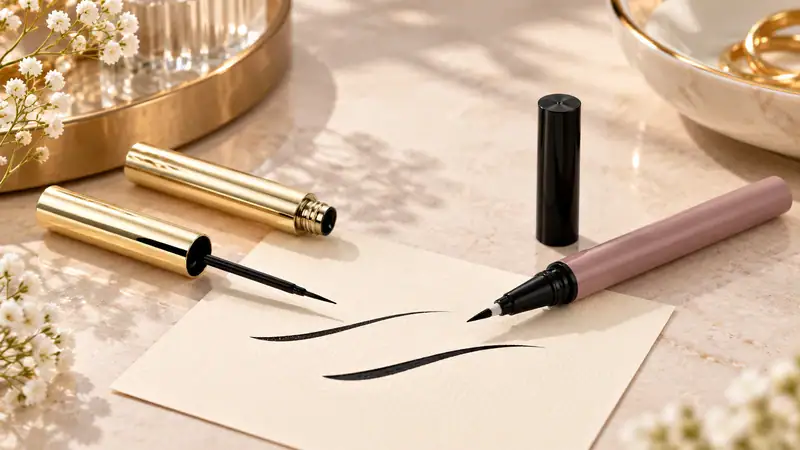
Brush versus felt tip: compare the full system
A fine brush can flex with hand pressure and help an experienced user vary line width. In a dip-brush bottle, the user can reload it by returning the wand to the formula. Its performance depends on bristle shape, wand length, the amount of liquid picked up, and how effectively the neck or wiper removes excess.
A felt tip generally offers a firmer, more guided point. It may feel approachable for a consistent narrow line, but it depends on reliable flow from the reservoir to the nib. A tip that works at first can draw faintly after storage or after the cap has been left off briefly. Formula deposits may also change its shape or feel.
| Buyer question | Dip brush bottle | Felt-tip pen |
| How is the tip loaded? | By dipping into the bottle | Through an internal feed system |
| What controls the line? | Brush shape, flexibility and pickup | Nib shape, firmness and flow |
| What may fail during use? | Overloading, clumping or an uneven brush | Faint strokes, dry tip or blocked feed |
| What needs particular attention? | Neck, wiper, wand and closure | Reservoir, nib and cap seal |
Neither format is automatically better. The useful comparison is how each performs with your eyeliner after storage and repeated use.
Match formula behavior to the applicator
Viscosity alone does not describe how a liquid eyeliner will behave. Pigment concentration, film formers, solvents and drying speed all influence flow and buildup. A brush may carry too much of a thin formula or struggle to lay down a continuous line with a thicker one. A pen tip may be vulnerable if the formula dries quickly around its feed path.
Define the intended result before you evaluate packaging: ultra-fine line, flexible wing, bold opaque stroke or quick everyday application. Draw lines at several angles and pressures on the same surface. Compare their width, opacity, skips and the amount of product deposited at the start and end of a stroke.
Somewang Packaging’s gold brush-tip eyeliner tube is a reference for a dip-brush structure. Its PP eyeliner pen container provides a different, pen-style reference. Confirm the precise nib material, internal feed and fill specification for any pen sample before calling it a felt-tip option.
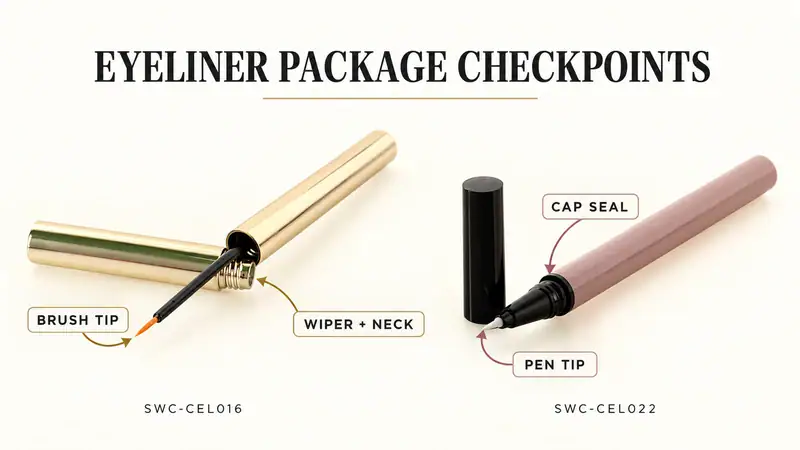
Treat dry-out as a package-and-formula problem
Dry-out can mean several different failures: the liquid loses solvent in storage, the brush becomes crusted with residue, or a pen nib stops receiving enough formula. Diagnose the symptom before changing a component.
For a dip-brush bottle, inspect the cap-to-neck fit and any buildup on the threads or wiper. Close the pack normally, store it in the expected orientations, then compare product mass and application over time. Check whether repeated dipping changes the brush or leaves residue that interferes with closure.
For a pen, examine the cap seal around the tip and the path from reservoir to nib. Compare first use with samples stored tip-up, tip-down and horizontally. Include realistic cap-off intervals and recapping cycles. A pen that produces a good line only when freshly opened has not demonstrated useful performance over its intended life.
Set pass criteria that consumers would recognize: a continuous line, acceptable opacity and normal effort to start drawing. Record the test duration and storage conditions so results from different samples can be compared fairly.
Check leakage under the conditions the pack will face
A closed eyeliner can leak at a bottle neck, around a wiper, through a pen-tip opening or beneath a poorly fitted cap. An empty-package inspection cannot prove how the filled system will behave. The final formula can wet surfaces differently and leave residue after repeated use.
Start with filled samples at the proposed fill level. Inspect them upright, sideways and inverted after storage. Add the temperature changes and transport handling appropriate to the distribution route. Examine the outside, cap interior, threads and applicator area for wetness or dried deposits. Then repeat the review after normal opening and closing cycles.
A leak check should not become a single unexplained “pass.” Agree on what counts as unacceptable: visible drops, staining inside the cap, formula on the consumer’s hand, or mass loss beyond your project limit. If a sample fails, identify the exact location before changing the cap, wiper or tip.
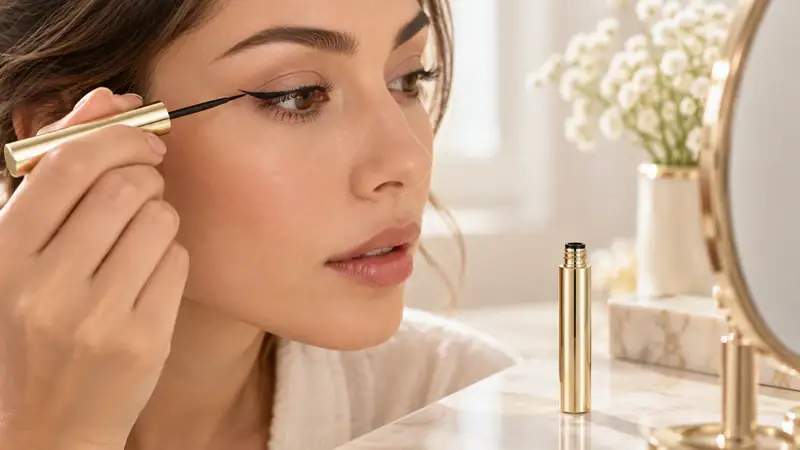
Ask for samples that answer the buying question
Request assembled samples of the exact applicator, cap and container combination under consideration. For a brush bottle, specify brush shape, wand length, neck dimensions and wiper option. For a pen, ask the supplier to identify nib construction, reservoir or feed arrangement, cap design and recommended filling approach.
Send the supplier your formula version, target fill, intended line style, decoration, order quantity and launch schedule. Ask for component drawings and material information for every formula-contact part. If you compare several samples, use the same formula batch and evaluation method so the results point to packaging differences rather than uncontrolled changes.
Before approving production, keep a retained filled sample and a written record of line performance, dry-out observations and leakage limits. That gives both brand and supplier a clear reference if the design changes later.
Choose Eyeliner Packaging with Somewang Packaging
The right eyeliner pack delivers the line your brand promises throughout normal use. Compare applicators through filled samples, then verify cap sealing and leakage with the final formula. For brush-bottle or pen-style options and project-specific samples, contact Somewang Packaging.
Frequently Asked Questions
- Is every precision eyeliner pen a felt-tip pen?
No. “Pen” describes the package format; the nib may have different constructions. Confirm the actual tip material and feed system with the supplier.
- Why does a liquid eyeliner tip dry out when the bulk formula looks fine?
The cap may allow too much air exchange, formula may dry in the nib or brush, or the feed system may not replenish the tip consistently. Test the filled, assembled package.
- Does a brush bottle need a wiper?
A wiper or neck insert can help control pickup, but its dimensions must suit the brush and formula. Compare filled samples for loading, cleanup and line quality.
- What is the simplest useful leak check?
Inspect filled, closed samples in several orientations, then repeat after storage and opening cycles. Include the cap interior and neck or tip area in the review.
- Should brush and felt-tip samples use the same test plan?
They should share goals such as line quality, dry-out resistance and leak control. Add format-specific checks for brush loading and wiper action, or for pen feed and nib performance.