
Choose lip balm tube packaging around the formula and application routine. A firm balm that holds its shape is a starting point for a twist-up stick. A softer balm that flows under comfortable hand pressure may suit a squeeze tube. The final choice should work with your filler’s process and the product customers receive after storage, not just an attractive empty sample.
For brand buyers, the format also changes the components, decoration area and work included in a quotation. Shortlist the package before committing to artwork, then give the component supplier and filler the same requirements.
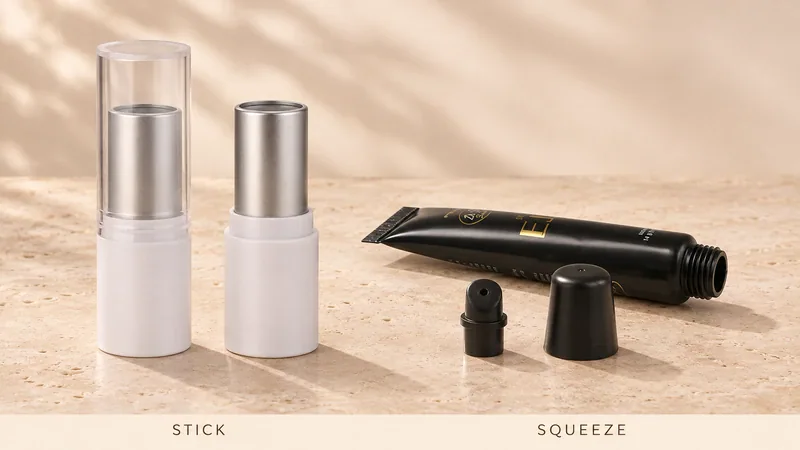
Define the Use Conditions Before Requesting Samples
Describe the intended balm texture, target net quantity and application method. Include relevant storage and use conditions: a balm that feels firm at room temperature may soften in warmer conditions, while a soft balm can become harder to dispense when cool. Have the developer define the conditions that matter for your formula and market.
Add the number of shades or flavors, quantity per version, preferred finish and launch timing. Identify who supplies and assembles the tube, cap and applicator. A reference photograph helps explain appearance; the formula and filling brief determine which components are worth sampling.
Start by asking which existing components meet the brief. A stock shape with a different color or print may be sufficient for the launch. A change to the holder, outlet or closure can introduce structural work and additional sampling. Separate those requests in the inquiry so the supplier can explain their effect on tooling, order quantities and timing before you choose a custom route.
Choose a Stick for a Supported Solid Balm
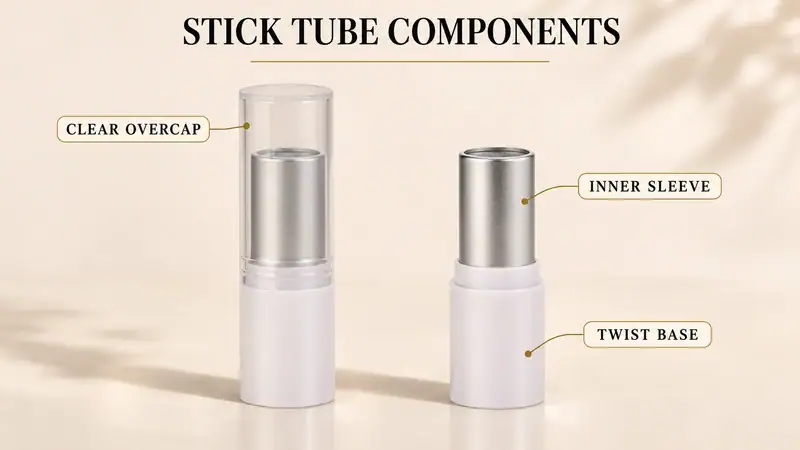
Match the Holder to the Balm
A twist-up tube raises the balm on an internal holder. Request its dimensions, supported profile and usable travel, rather than estimating capacity from the outside shell. With the actual formula installed, assess support at a realistic application height. Look for leaning, slipping or breakage, then confirm retraction and cap clearance in the closed position.
Our round twist-up tube with clear overcap is one reference. Its transparent cap and silver-tone sleeve establish the visible format. Confirm the internal holder and workable net fill for the exact version; those details cannot be approved from the exterior photograph.
Confirm the Filling Route
Ask whether the component supports direct filling or requires a separately formed stick. For direct filling, agree the fill conditions and how the tube is supported during dosing and cooling. For an inserted stick, confirm the mold profile and seating method with the filler.
Review the cooled balm for shrinkage, surface changes and separation from the holder. Record the filling conditions with the approved sample. A hand-assembled example can establish initial fit, but the planned filling process also needs to handle the selected formula and component consistently.
Choose a Squeeze Tube for Soft Dispensing
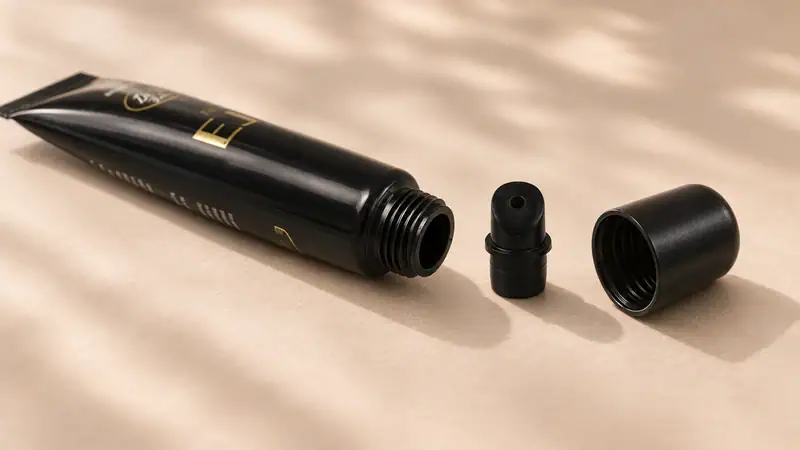
Match the Wall and Outlet to the Dose
A squeeze tube suits a balm that can move through an outlet under normal hand pressure. Wall flexibility, opening size and formula behavior work together. An opening that controls a flowable balm may be uncomfortable with a thicker formula. Compare first use with a partly empty tube, including whether flow stops after pressure is released.
A slanted tip can spread balm directly, while other applicators change contact and delivery. Request the actual tip and cap combination for sampling. Inspect residue around the outlet and inside the cap, rather than judging dispensing from one squeeze.
Our soft lip balm and lip oil squeeze tubes offer a starting point for discussing component options. Confirm whether the applicator is supplied installed or separately and who completes its assembly.
Ask for the Complete Material Structure
For the shortlisted tube, request the wall construction and formula-contact materials, including the outlet and closure. A broad plastic description does not identify every layer or component. Ask the developer and supplier to evaluate the proposed structure with the formula and agree the compatibility and storage review needed before approval.
Confirm Filling and Artwork Together
Many flexible tubes are filled through an open tail, then sealed and trimmed. Confirm the delivery state for the selected model and whether your filler’s equipment accepts its diameter, length and wall structure. Ask the filler to define the required seal area, trimming allowance and any orientation marks before the artwork is finalized.
Provide the target net quantity in the unit you intend to sell. Grams and milliliters depend on formula density and are not interchangeable. Have the filler verify the usable quantity in a finished sample, allowing for the stick holder or the squeeze tube’s final seal position.
Review the Finished Printable Area
For a stick, keep essential copy clear of cap overlaps and rotating interfaces. For a squeeze tube, check the front panel, applicator orientation and tail position on the finished drawing. Review the artwork at actual size and on the intended finish. Confirm that flavor or shade identifiers remain easy to read when the pack is closed or squeezed.
Compare the Two Formats on the Same Basis
| Decision | Twist-up stick | Squeeze tube |
| Application | Supported balm swiped directly | Balm dispensed through an outlet |
| Filling interface | Holder and filling or insertion route | Delivery state and tail sealing route |
| Net fill | Usable holder and stick profile | Usable space at final seal position |
| Artwork boundary | Cap overlap and rotating base | Seal area and applicator orientation |
Approve the decorated package in the condition your filler will receive. A finish or applicator change can affect handling and assembly even when the body size stays the same. Identify the revised component before the next trial.
Make Samples and Quotes Comparable
When both formats remain plausible, compare filled samples using the same formula reference and record how each was prepared. Agree acceptance criteria for application, closure performance and appearance under the relevant storage conditions. Keep the component revision and filling record with the retained sample so later orders have a reproducible reference.
Quote the complete configuration: body, cap, applicator or mechanism, decoration, assembly and protective packing. Separate tooling and setup charges from recurring unit costs. Check minimum quantities per model, component color and artwork version; a shared tube does not necessarily mean every flavor label can use the same order minimum.
For a range, identify variants whose texture or filling behavior differs enough to need their own review. Link each formula to its packaging artwork and carton code. Include the receiver’s required counts and delivery state so the filler can reconcile parts before scheduling work.
Connect Component Timing to the Filling Schedule
Clarify when the quoted lead time starts and what must be approved first. Component samples, decorated samples, artwork confirmation and the filler’s booking are separate milestones. Ask whether the supplier’s schedule includes special caps, applicators and protective packing or only the main tube body. Give the filler a realistic delivery date for the complete set of parts. If one part or artwork version is delayed, agree how that affects the filling plan rather than treating the first carton of tubes as launch readiness.
Request Lip Balm Packaging Samples From Somewang Packaging
Browse our lip balm tube range and contact us with your formula direction, target net fill, preferred format and quantity by version. Include filling constraints and artwork requirements so we can discuss suitable samples, drawings, MOQ and lead time for your project.
Frequently Asked Questions
Can One Lip Balm Formula Work in Both Formats
Possibly. The formula must stay supported in a stick and dispense acceptably through the chosen squeeze system. Compare both filled packages under the conditions defined for the product before approving a shared formula.
Does a Clear Cap Mean the Stick Is Airtight
No. Transparency describes appearance, not sealing performance. Evaluate the complete closure with the filled formula when leakage or changes in product condition are relevant.