
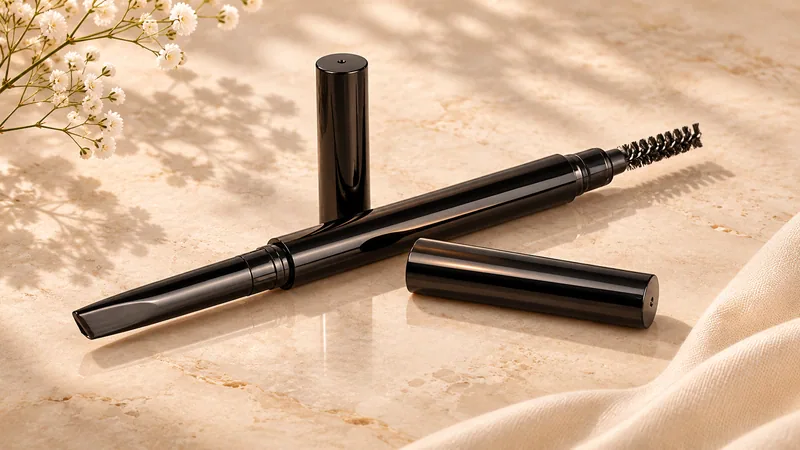
Specify eyebrow pencil packaging around the actual core and the way the finished pencil will be used. An empty tube can feel smooth while a filled pencil develops core movement, uneven travel or tip damage under its cap. The purchasing brief should connect the core, holder, mechanism and closures to the assembly method.
This guide covers packaging for solid brow pencil cores. Liquid brow pens and brow gel containers use different delivery systems, even when their product names sound similar. Confirm the architecture before comparing quotations.
Start With a Shared Component Brief
Send the packaging supplier and assembly partner the same core drawing or sample, formula reference, target net weight and preferred single- or double-ended format. Include quantities by shade, decoration and launch timing. Identify who supplies the cores, tube, brush and caps so there is no gap between a quoted component and a complete pencil.
Define the Brow Result Before Choosing the Tip
Describe whether the customer needs fine individual strokes, broader shading or a defined edge. Core shape and exposure influence those actions, while barrel diameter and grip affect control. Give the supplier a practical use reference rather than asking only for a premium-looking pencil. If the range needs both precision and shading, decide whether one core profile can serve both purposes or whether separate formats are needed. Keep that decision linked to the formula developer’s proposed core.
Separate Core Requirements From Barrel Dimensions
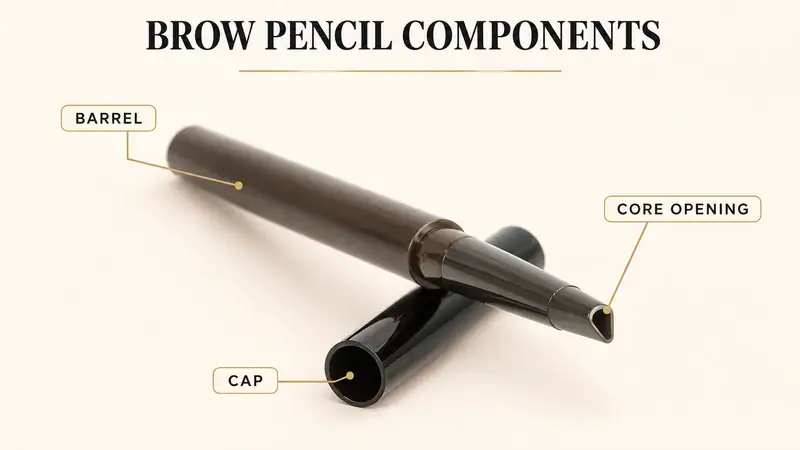
Record the core cross section, dimensions where it enters the holder, usable length and target net weight. Include its expected exposed length during application. Round, angled and triangular cores require the corresponding support; the outside barrel diameter does not establish that fit.
For example, our single-ended eyebrow pencil tube with an ABS body measuring D10 × H122 mm and a nominal 0.3 g capacity. These figures describe the external format and listed capacity. Request the internal drawing and verify the intended core in the actual holder.
Review the Installed Core
Have the assembly partner install the production-intent core using the proposed method. Check seating, centering and support at the intended application height. Record movement, slipping or breakage and the stage at which it appears.
A break during insertion can involve fit or the assembly method; a break during application may also involve exposure length or formula behavior. Keep affected samples and the conditions used for review. Label every revised core or holder so the supplier and brand evaluate the same version.
Specify Mechanism Caps and Spoolie Together
Define the Advancement and Retraction Behavior
For a mechanical pencil, confirm the direction of operation, usable travel and whether the selected version allows retraction. Assess movement with the core installed, including the agreed travel limit. Do not assume all pencil mechanisms operate in the same way.
Record the checking method and the core exposure used during application review. Ask the responsible supplier to propose suitable acceptance values for the exact model; a generic rotation force or cycle count may not suit its construction.
Check Each End in Its Finished State
With the core in its correct closed position, check that the cap clears the tip and seats securely. Opening the cap should not disturb the holder or detach a component. Review the closure after the storage and repeated-use conditions agreed for the project.
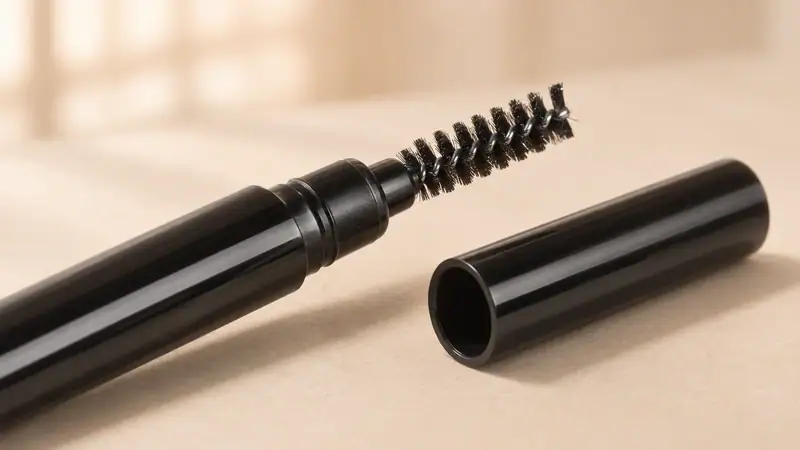
A double-ended eyebrow pencil with spoolie adds a brush attachment and second cap. Check the brush connection during normal grooming, bristle clearance inside its cap and how customers distinguish the two ends. Confirm the complete part list, rather than assuming the brush and both caps are included in every quote.
Confirm Assembly Before Approving Decoration
Give the component drawing to the company that will install the cores. Confirm how it holds the barrel, inserts the core and completes the mechanism, brush and caps. Review samples before insertion, after insertion and after capping to identify where a defect begins.
A hand-assembled sample is useful for fit review. The planned production method should also demonstrate that it can handle the chosen core and housing consistently. Use decorated components for the later trial so coatings and printed areas are assessed at the actual fixture contact points.
Agree the delivery state and protection with the component supplier. Separate caps or brushes need clear counts and identification. Barrels need protection suited to their finish, and the receiving team needs to know how parts will be unpacked and oriented for assembly.
Turn the Approved Sample Into a Written Standard
| Area | What the specification should record |
| Core and holder | Core revision, profile, seating, support and application exposure |
| Mechanism | Advance, retraction where applicable, travel limits and checking method |
| Caps and brush | Tip clearance, closure fit, brush attachment and included parts |
| Decoration | Artwork revision, placement, legibility, finish and shade marker |
| Delivery | Assembly state, component counts, protection and identification |
Retain the labeled approved sample, component drawing and inspection sheet together. Record the model, drawing revision, core formula reference, artwork version and approval date. Give the packaging supplier, assembly partner and brand quality team matching references.
Review the assembled pencil after storage and transport conditions relevant to the product and route, using the intended protective packing. Identify changes in core condition, mechanism behavior and cap fit. When the core, holder, mechanism or coating changes, repeat the affected checks on the revised assembly.
Identify the Dimensions That Control Fit
Ask the component supplier and core maker to identify the interfaces that need dimensional control, including the holder opening and the section of core it supports. Request the relevant tolerances on their drawings rather than setting a universal clearance. Confirm how each party measures an angled or triangular profile, since a single diameter cannot describe it. When a fit changes, compare the approved and revised dimensions before adjusting assembly equipment or ordering another batch of cores.
Keep Shade Identification Consistent Through the Order
Prepare a list linking each core shade to the barrel printing, end marker, cap version and carton code. Similar brown shades can be difficult to distinguish by appearance during assembly. Approve the finished pencil and carton identification together.
Make Small Shade Marks Easy to Read
Choose the shade-marking area after reviewing the available barrel and cap surfaces. A narrow curved surface can leave little room for a long name or code. Check the final artwork at actual size, including contrast against the selected finish and visibility after capping. If a code also appears on an inner bag or carton, use the same naming convention so receiving staff can match components without interpreting similar color descriptions.
Ask whether all shades use the same core dimensions and installation conditions. Include any materially different shade in the assembly review. Compare quotations on the same part list, assembly state, decoration and packing scope, and confirm which minimum quantities apply per shade, color or artwork version.
Request Eyebrow Pencil Packaging Samples From Somewang Packaging
Explore our eyebrow pencil packaging range and contact Somewang Packaging with the core drawing or sample, target net weight, preferred format and quantity by shade. Include assembly constraints and any current fit or operation issue. We can discuss candidate components, drawings and samples, then confirm the configuration, MOQ and lead time for your project.
Frequently Asked Questions
Does the Listed Capacity Establish the Core Diameter
No. Net weight depends on formula density, core profile and usable length. Request the holder dimensions and supported cross section, then verify fit with the actual core. A nominal capacity is not an internal dimensional drawing.
Can Several Brow Shades Share One Barrel
Yes, if their cores fit the same structure and meet the agreed assembly and use requirements. Confirm that basis for each shade and establish reliable identifiers for the pencil and carton.
Can Every Mechanical Brow Pencil Retract
Retraction depends on the mechanism. Ask the supplier to demonstrate the selected version and specify its intended closing position. Cap clearance should be assessed in that position.