
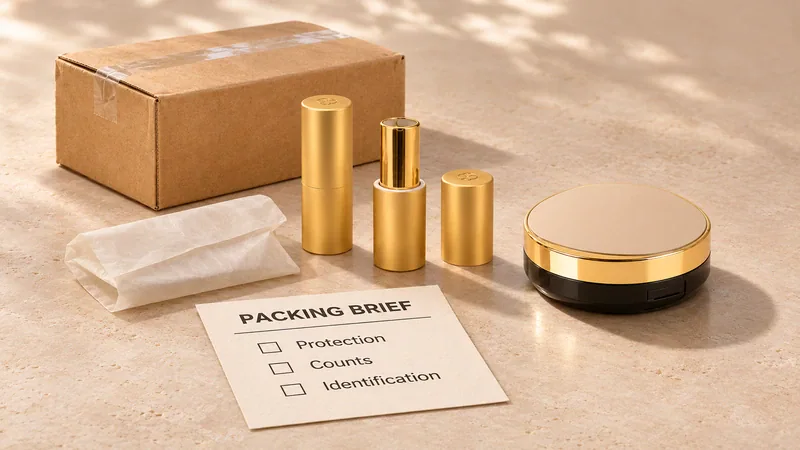
Agree the pack-out specification before your bulk makeup packaging order is packed. It should state what is shipped, how each component is protected, how quantities are counted and what the warehouse needs to identify the delivery. A correct total count is of little use if the filler receives scratched shells, unmatched caps or mixed artwork versions.
This guide covers empty makeup containers and packaging components moving to a filler or receiving warehouse. Filled cosmetic products need a separate shipment assessment based on their contents and distribution route.
Define the Delivery State and Component List
List each body, cap, mechanism, applicator and insert by model, revision, color and decoration. State whether the supplier delivers a complete empty assembly or separate components, and which steps remain for the filler. Confirm the condition of movable parts, such as whether a stick mechanism is retracted and a pump is supplied locked.
Matching quantities deserve their own check. For example, an order for 12,000 empty lipstick sets may contain 12,000 bodies and 12,000 caps packed separately. The documents should distinguish 24,000 individual parts from 12,000 complete sets. This is an illustrative count, not a standard Somewang case pack.
Record the Requirements Before Packing Starts
- Component list and delivery state, including any separate accessories.
- Protection material and arrangement for each finish and component.
- Quantity per inner pack, full carton and final partial carton.
- Carton size, gross weight, sealing and any pallet requirements.
- Approved labels, packing list fields and version controls.
- Packing review, acceptance criteria and records required for release.
Our about us page describes standard export carton packing and special packing according to customer requirements. The exact materials, layout and quantities should be confirmed for the selected order.
Protect the Finish and Vulnerable Components
Keep Decorated Surfaces From Rubbing
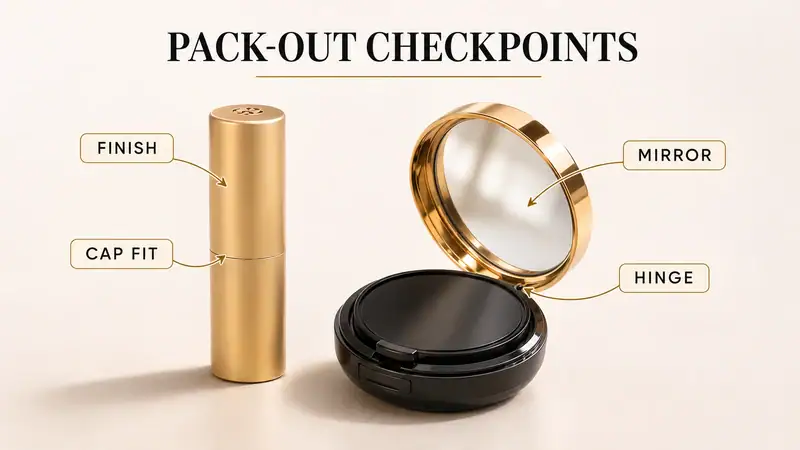
Metallic finishes, printed logos and glossy shells can show contact marks after transit. Discuss sleeves, compartments or fitted trays according to the actual finish. Check both where the part touches the protection and where neighboring parts could meet if the carton moves.
Our magnetic lipstick tube is a useful product reference for this discussion. Assess the proposed protection on decorated samples for rubbing, impressions and residue. A photograph of the tube does not establish a confirmed shipping arrangement.
Support Hinges Closures and Projecting Parts
Arrange parts so packing loads bear on suitable supporting surfaces. Avoid relying on a pump actuator, projecting applicator or decorative cap to carry the weight above it. Confirm the agreed position of closures and mechanisms with the filler, since the delivery state affects both protection and unpacking.
For mirror compacts, review the hinge, latch, mirror and inner pieces after the packing review. Separate loose inserts when necessary to prevent them from loading or scratching the case. The appropriate configuration depends on the model and assembly sequence.
Keep Formula Contact Areas Covered
Agree how open containers and applicators will be protected from dust and loose debris. Specify any liner or bag rather than assuming it is included. Have the filler assess how inner packs will be opened and transferred to the line. Protective packing does not by itself establish cleanliness or sterility.
Set Carton Counts and Receiving Limits Together
Specify pieces per inner pack, inner packs per master carton and the total per full carton. Identify partial cartons by their actual count. Do not reuse a full-carton label on the last carton unless the quantity is corrected.
Ask the supplier to verify external packed dimensions and gross weight with the proposed protection in place. Share those figures with the carrier and destination warehouse. More layers can reduce carton count while increasing pressure on the bottom layer; assess the effect on the parts and the receiving team’s handling limits.
Confirm carton construction, layer separation, top protection and sealing for the route. If palletized, agree pallet dimensions, loading pattern, maximum height and gross weight, stacking restrictions and how cartons remain identifiable when a pallet is split. Use the receiver’s requirements for these limits rather than a generic maximum.
Use Labels That Match the Packing List
| Field | Information to record |
| Order reference | Buyer purchase order and shipment reference |
| Component identity | Model, part name, revision, color and artwork code |
| Traceability | Supplier lot or batch reference |
| Quantity | Actual pieces and whether the count is parts or sets |
| Carton identity | Carton number and total carton count |
| Handling data | Dimensions, net and gross weights where required |
Use matching identifiers on inner packs that may be separated from the carton. Approve label content and position with the receiver. Barcodes and warehouse label formats should follow the customer’s instructions.
Prefer clear separation of versions. If mixed cartons are needed, obtain receiving approval, mark them as mixed and list every component and quantity. Make it possible to reconcile the contents without relying on visual similarity.
Keep the packing list consistent with actual carton counts and weights. An illustrative label is a useful review aid; the final record must describe the shipment that leaves the supplier.
Approve the Packed Configuration for the Route
Request a representative packed sample or layout using the intended decorated components, protection, layer count and carton. Record the configuration with photographs that show inner protection and carton identification. Agree what evidence the supplier can provide for your order.
Select the transport review around the actual route. Parcel delivery, palletized freight and repeated transfers expose cartons to different handling. Ask the packaging or logistics specialist to determine the relevant compression, vibration, impact or environmental checks and their acceptance criteria.
After review, inspect the components as well as the carton. Look for finish marks, broken mirrors, loose parts, deformation and displaced protection. Check closures and mechanisms against the approved sample. A carton can look acceptable while parts inside are damaged.
Our BB cushion compact illustrates why inner components matter. Confirm the actual delivery state and packing arrangement for your chosen version; the product image is not a packing instruction.
Include an Unpacking Review
Have the receiver check label readability, count reconciliation and removal of parts without damage or excessive handling. Record special protection costs with the quotation. A change in trays, sleeves or carton dimensions should trigger review of the affected protection and counts before the revised arrangement is used.
Confirm Records Before Dispatch and at Receipt
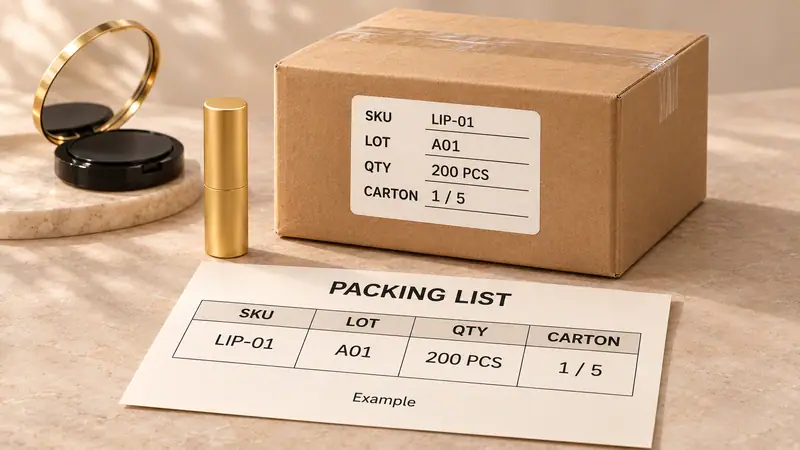
Before release, reconcile the approved component revision and pack-out revision with the final packing list. Confirm actual quantities, carton sequence, dimensions, gross weights and required photographs. Retain the approved layout with the purchase order for repeat shipments.
At receipt, record visible carton damage, affected carton and lot references, and any quantity differences. Photograph damage before discarding the protection and retain representative affected parts. These records help the supplier distinguish a component issue from a packing or handling problem.
Plan Your Shipment With Somewang Packaging
Send us the models from our makeup packaging range, quantities by version, delivery state and destination. Include warehouse limits, label instructions and any special protection requirements. Contact Somewang Packaging to discuss packing options alongside the component quotation and agree the review needed before dispatch.
Frequently Asked Questions
Should Empty Containers Be Fully Assembled
Choose the delivery state with the filler. Assembled packs can simplify matching, while separate components may suit filling or insertion. Confirm each party’s assembly responsibilities and the quantities needed for complete sets.
Is Standard Export Packing Enough
It is a starting proposal. Suitability depends on the component finish, geometry, carton arrangement and shipping route. Confirm the configuration and acceptance criteria for the actual order.